Europe urgently needs a pan-European agriculture water plan
The map of the 2026 climate impacts on EU agricultural systems almost entirely overlaps with the long-term trends observed in recent years. 2026 is a year of climate extremes – excess water, extreme temperatures, and drought affecting 70% of agricultural land within the same year. The European Union is not being caught by surprise by this new reality, but it is facing it in a state of almost total unpreparedness, due to a lack of investment and anticipation of these phenomena affecting agricultural systems already under very severe pressure.
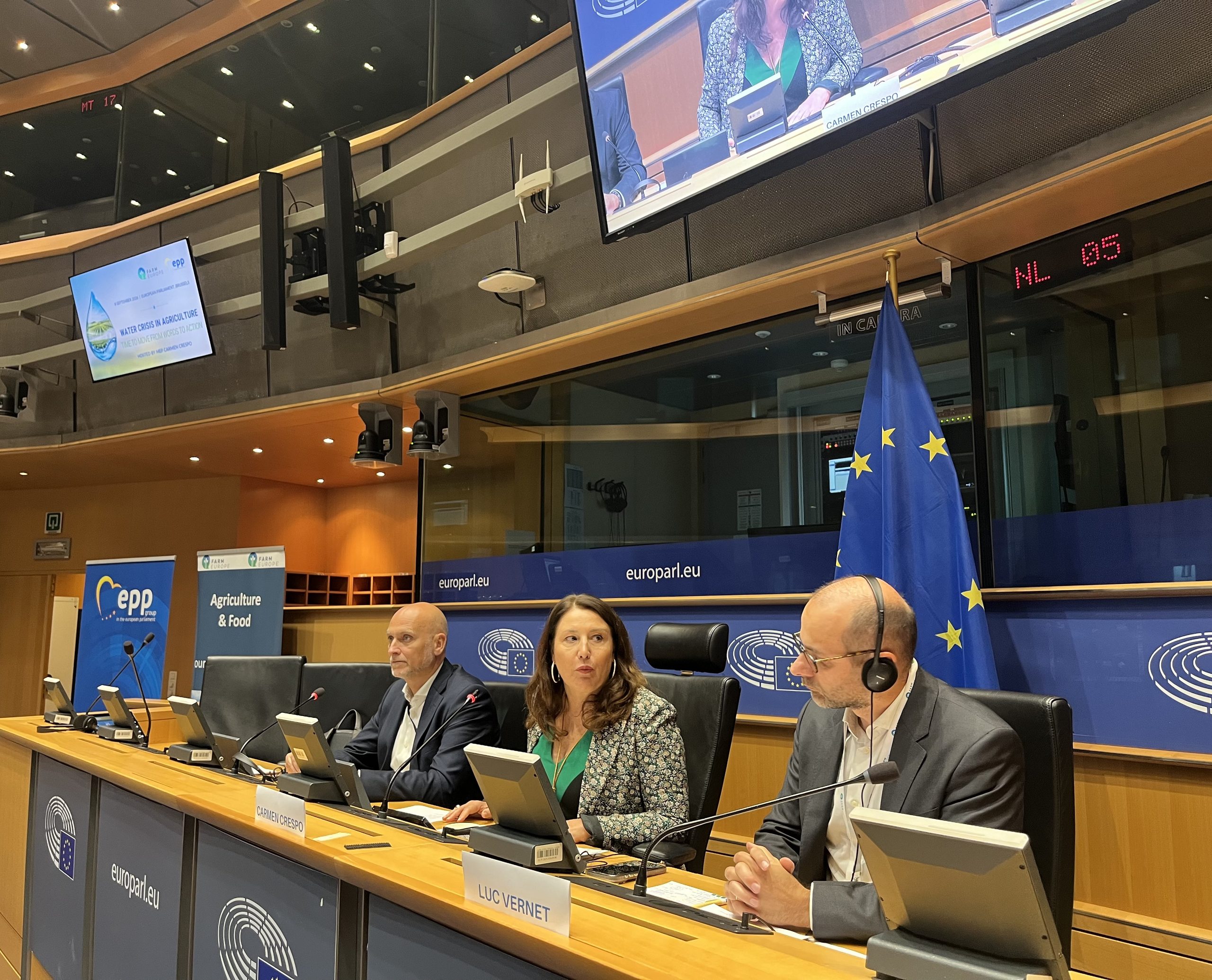
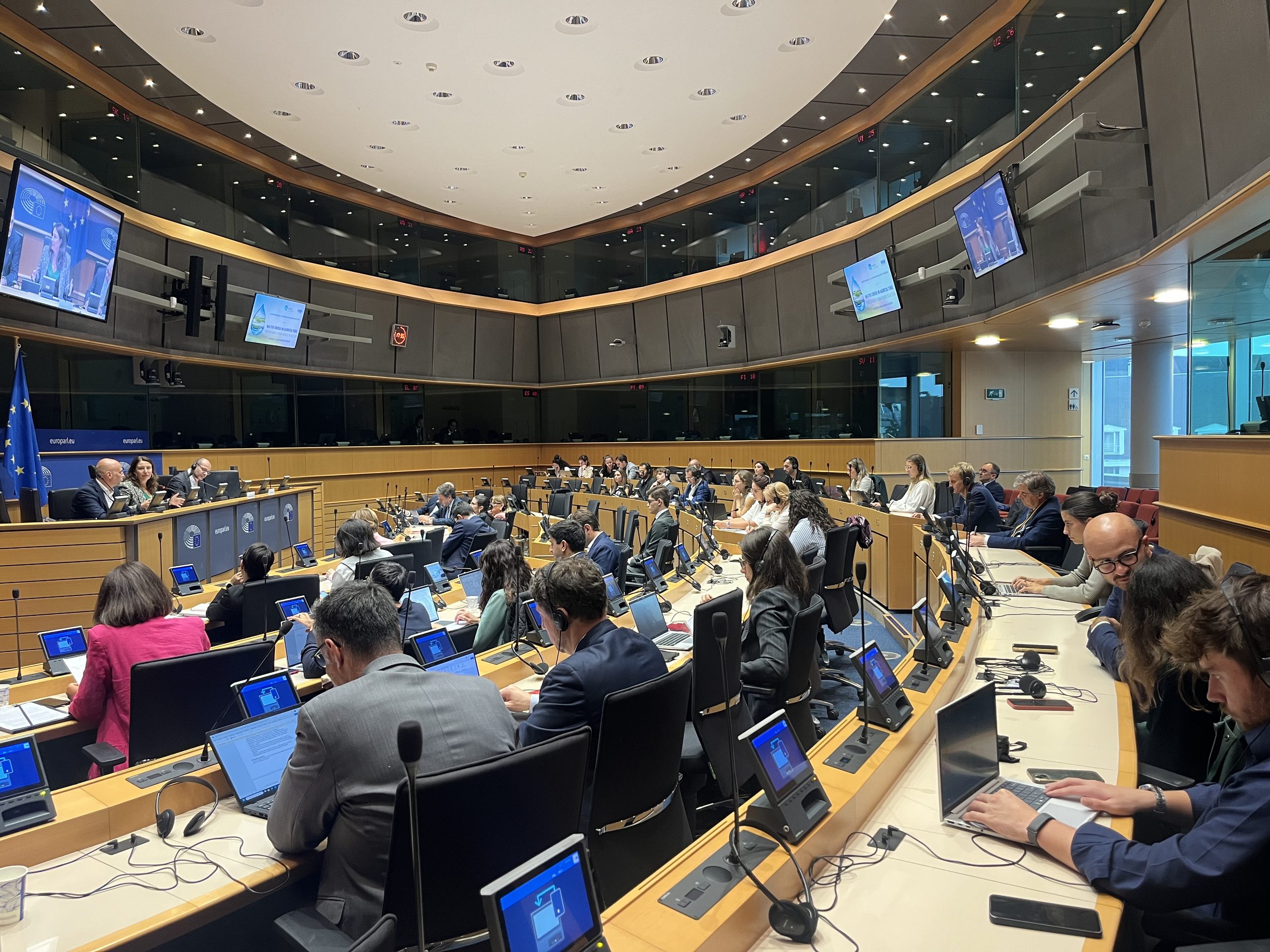
This is the main finding highlighted by the second part of the study entitled: “An agricultural water crisis that calls for a European plan to solve the puzzle of regional challenges”, presented on 8 September at the European Parliament, during an event held under the patronage of Ms Maria Carmen Crespo, Member of the European Parliament’s Committee on Agriculture.
On this occasion, alongside Ms Letizia Moratti, Member of the European Parliament’s Committee on the Environment, Ms Gaëlle Marion, Head of Unit “Environmental Sustainability” at the European Commission, Ms Céline Duroc, Director of AGPM and CEPM, Mr Adriano Battilani, Secretary-General of Irrigants d’Europe, Ms Claudia Albani, representative of Coldiretti, and Mr José Maria Castilla, Director for Europe at ASAJA, Luc Vernet, Secretary-General of Farm Europe, stressed:
“Farmers cannot face the water challenge alone. They are waiting for a strong signal from European leaders, and in particular from the President of the European Commission in her State of the Union address, regarding the measures envisaged both in the short and long term to support agriculture. 80% of agricultural losses in recent years have been caused by climate-related events. Water management in agriculture is the first risk-management lever, yet it has been significantly underinvested in over recent years. This issue does not concern farmers alone: agricultural soils are at the heart of natural cycles. They are the EU’s largest water infrastructure. Their good health determines not only our food supply, but also our ability to regulate temperatures, limit flooding, recharge groundwater, and store carbon. Securing farmers’ access to water is not a corporatist demand; it is a societal issue and a matter of safeguarding the water cycle.”
Against this backdrop, Farm Europe is calling on the European Commission to build a water strategy hand in hand with the agricultural sector, bringing together climate and agronomic expertise to develop relevant solutions tailored to the challenges of each territory. The second part of the study, which will be followed by work focused on solutions, combines three levels of analysis: an analysis of agricultural systems, an analysis of the sensitivity of agricultural ecosystems to water needs, and an assessment of hydro-climatic resources, taking into account their ongoing evolution. This analysis makes it possible to develop indicators that are fundamental to shaping the future.
It is becoming clear that no region is now beyond the reach of the water challenge: the entire European Union is concerned. But there is neither a single challenge nor a single solution: European cooperation is needed to define an adaptation pathway focused on the capacity to produce in a context of increasingly constrained water availability.
The adaptation levers exist: carbon farming, precision agriculture; investment in storage, irrigation, water reuse and desalination infrastructure; efforts to reduce the sensitivity of agricultural systems through the genetic adaptation of crops (particularly through NGTs) and adaptation of crop rotations where necessary.
To achieve this, short-, medium- and long-term financing tools must be made available, with investment in water availability for agriculture treated as a strategic investment within the current and future EU budget, including the Competitiveness Fund and the Common Agricultural Policy.
“The delay accumulated over the past 20 years means that the European Union must manage the emergency through short-term measures to ensure the continuity of production, while preparing for the future in order to move beyond a situation of permanent crisis,” concludes Luc Vernet. “This calls for putting agriculture back at the heart of the European project, as a strategic endeavour that benefits European society as a whole.”
Link to the study: