| Total expenditure (EAFRD + national) | Premiums | Mutual Funds | IST |
| BE – Flanders | 5.000.000 | 0 | 0 |
| ES – Castilla y Leon | 0 | 0 | 14.000.000 |
| FR | 540.750.000 | 60.000.000 | 0 |
| HR | 56.600.000 | 0 | 0 |
| HU | 76.540.000 | 0 | 18.800.000 |
| IT | 1.396.800.000 | 97.000.000 | 97.000.000 |
| LT | 17.460.000 | 0 | 0 |
| LV | 10.000.000 | 0 | 0 |
| MT | 2.500.000 | 0 | 0 |
| NL | 54.000.000 | 0 | 0 |
| PT – Continente | 49.700.000 | 0 | 0 |
| PT – Madeira | 800.000 | 0 | 0 |
| PT – Açores | 2.350.000 | 0 | 0 |
| RO | 0 | 200.000.000 | 0 |
| Total | 2.212.500.000 | 357.000.000 | 129.800.000 |
Author: Farm Europe
FARM EUROPE’S RESPONSE TO THE INQUIRY OF THE HOUSE OF LORDS ON RESPONDING TO PRICE VOLATILITY: CREATING A MORE RESILIENT AGRICULTURAL SECTOR
The UK House of Lords launched an inquiry into price volatility and agricultural resilience before Christmas and started a debate on the topic yesterday.
Farm Europe has been invited to contribute to the debate.
Below our responses:
- What is the role of public policy in mitigating the impact of potential price volatility? To what extent should the response be a shared endeavor between the EU institutions and Member State governments? What are the differing roles of industry on the one hand and individual farmers on the other?
Farm Europe agrees that price volatility drivers are indeed variable and complex. More frequent extreme weather-related events as a result of global warming, increased food demand as a result of population and income growth, and the interlinkages between commodity and financial markets do appear however to play a significant role.
None of the above drivers of price volatility are amenable to appropriate mitigation by individual farmers or other agro-food actors. Therefore public policy should play a role to respond to its negative impacts.
The resilience of the agricultural sector underpins the secure, sustainable and affordable supply of food to the citizens of the EU, as well as providing financial security for EU farmers. A resilient agricultural sector is one which can respond to risk effectively and take steps to mitigate the wider effects of global price volatility.
The agriculture policy being a long-standing European Union common policy, the Common Agriculture Policy (CAP) should thus be the right framework for adequate policies to mitigate the effects of price volatility.
The CAP cannot achieve that goal without engaging with, and delegating to, Member States authorities and private sector actors. Diverse and detailed instruments would be called upon to implement its policies, and that is best done at national or sub-national level, and with public and private actors. Public private partnerships could be a model in this area.
Farmers are by far and large the most affected and interested group, and they should benefit from the mitigating measures to be applied. Farmers should also be called upon to participate in those measures to a reasoned and balanced extent.
The role of industry should be to provide as far as possible stability to the farming sector, and a more balanced distribution of benefits across the value-added chain.
- Should public policy responses make a distinction between support for the resilience of the industry as a whole, support for the resilience of specific sectors and support for the resilience of individual units of activity?
It is difficult to support the resilience of the whole industry, without supporting first and foremost the individual units of activity – the farmers.
In addition to that support targeted to specific sectors which face specific difficulties could be a means of increasing the effectiveness of the measures. There is no such thing as a one-size-fits-all measure, and well targeted support is more effective than blanket policies.
- Currently, what are the key elements involved in the industry’s management of price risk? What further tools are needed?
Effective risk management can mitigate the adverse effects of price volatility. In the words of the OECD, “Risk management in agriculture is now an essential tool for farmers to anticipate, avoid and react to shocks. An efficient risk management system for agriculture will preserve the standard of living of those who depend on farming, strengthen the viability of farm businesses, and provide an environment which supports investment in the farming sector.”
In responding to this question Farm Europe believes it is useful to distinguish between farm level and agro-industry. There are currently big differences between sectors. Those sectors who have strong cooperatives are in a very different position than those which have only private actors. The farmer owned cooperatives have to a certain extent more possibilities and means to soften the impact of price volatility. At farm level the instruments available are contained in the CAP. They concern public intervention prices for some commodities (grains, beef, dairy), which are set at a low level to make sure they are only triggered in extreme situations; support to private storage when prices fall below established levels (pork, dairy); and indirect support to producer organizations in the fruit and vegetable sectors to withdraw surplus production. In addition to these instruments there is the possibility for Member States to support insurance schemes through ‘second pillar’ funds.
At the agro-industry and cooperative levels there are also some financial hedging mechanisms which are available to a few selected commodities and in a few selected markets. Currently in the EU future markets concern only two commodities and are available in only two markets– wheat (in Paris) and sugar (in London). Future markets, even if extended to other commodities, cannot but partially cover the agriculture output. For instance it is conceivable to have a future market for skimmed milk powder, but not for the highly diverse cheese production. To these limitations inherent to the instrument should be added the fact that it requires highly specialised knowledge to be used.
The existing mechanisms have proven to be insufficient when crisis strike, as demonstrated by the recent crisis in the dairy sector. In particular the insurance mechanisms are too few, and too weak to provide appropriate support for sectoral price falls.
At present the CAP spends 1% of its budget on supporting insurance, in contrast with 60% which are spent in direct income aids (direct payments) irrespective of market fluctuations.
A new framework for strengthening insurance mechanisms, with adequate support from the CAP, is a fundamental tool to be developed.
- What effect has the commoditisation of agricultural goods had on the ability of farmers to respond to risk effectively? How are farmers to mitigate the on-farm effects of volatile global commodity markets and currency fluctuations?
Commoditisation of agriculture goods should be seen in conjunction with
increased interlinkages between commodity and financial markets, and within commodity markets between agriculture and other commodities (energy, metals).
The effect of these developments has been to increase price volatility and therefore to further expose farmers to price swings stronger than what should be expected from usual supply and demand forces. The instruments farmers dispose to deal with these risks are at present rather limited – a few scattered insurance schemes, even fewer hedging instruments. Availability of relevant and accurate market information is also an area where there is still room for improvement.
- What are the barriers to more effective on-farm price risk management, including longer term pricing mechanisms, diversification, co-operative working and leasing? How can those barriers be overcome and what is the role of EU and national public policy?
It is the view of Farm Europe that on-farm price risk management is impaired by the lack of well funded instruments, in particular the lack of across the board insurance schemes.
Diversification helps, but there are limits to how far a farmer can diversify operations. Land, climate, technology and capital are well known constraints.
Cooperatives can help stabilize prices, but only up to the point of their financial and contractual capabilities. Future contracts are also helpful, but they are very limited in scope.
Farm Europe argues that EU and national public policies have a role to play, by providing appropriate insurance schemes across sectors and countries.
EU and national public policies should also set the right framework for better price transmission and a more balanced distribution of the added value in the food marketing chain.
- How ‘fit for purpose’ are market-based instruments? Could the marketplace help to mitigate risks by providing ways of smoothing out the impact of volatility? Are there ways in which EU and national public policy could encourage, and reduce the risk of introducing new financial products?
Insurance against significant price drops or crop failure could be provided through the marketplace, with adequate backing from EU and national public funds to guarantee stop-loss coverage to private insurers and to make premium affordable to farmers. Due to the very large financial requirements associated with price insurance schemes Farm Europe believes that they should be designed and supported at EU level, with CAP funding. It is unrealistic in our opinion to expect price insurance to be implemented only at national or sub-national level, as it is highly unlikely that the financial needs to cope with sharp price falls would be available. Another avenue open to market actors is to expand the use of contracts between farmers, or their cooperatives, and buyers (agro-industry, wholesale and retail), that could increase price stability and forward pricing.
- How realistic are terms for access to investment finance? What role is there for the European Investment Bank to support on-farm investment at a low cost? What other instruments could improve access to finance in a volatile environment?
Investment is key to the sustainable and competitive development of farming. One of the biggest problems facing farmers that are willing to invest or have invested in the recent past is how to cope with paying back loans in a volatile price environment.
Farm Europe sees the potential for the European Investment Bank to step-in and provide financial backing to lenders in the EU. The EIB could offer credit to lenders tailored to soften the terms under which farmers access investment credit.
- What level of information is available to farmers to engage with market-based instruments and to consider alternative options for on-farm actions? How might knowledge availability be improved? How can farmers be encouraged to acquire the skills needed to operate a modern business-like operation?
National advisory bodies provide information to farmers. A case should be made for that information to include how farmers could benefit from market-based tools to mitigate volatility and increase resilience, including insurance, contracting and future markets.
Also national authorities could provide training for farmers or their representatives to understand how to engage in contracting and in future markets.
- What role should innovation play in creating a more resilient agricultural sector? Should more be invested in scientific research which could have the potential to transform agricultural practices?
Innovation is in Farm Europe’s opinion a key to the future of the agriculture sector. Innovation could help farmers cope with more extreme weather events, through for instance more resistant seeds and improved soil management.
To foster innovation, research is paramount. The increase in productivity has slowed down in the last decades, questioning the ability of the farm sector to satisfy increased demand from a larger and wealthier population, in particular in emerging economies.
Worth underlining that the last decades have also witnessed a drop in agricultural research that needs to be reversed to provide enough food for the world increased demand.
Public and private bodies, at the EU and national level, should work together to foster agriculture and food research, and to disseminate its results.
- How effectively does EU agricultural policy currently assist farmers to mitigate the impact of potential price volatility? Is there a need for management of price risk to be an explicit objective of the Common Agricultural Policy? What long term changes should be made to the Common Agricultural Policy to support the agricultural industry in responding to price risk more effectively? Should insurance schemes play a more prominent role?
The current CAP attempts to stabilize farm incomes through direct income aids irrespective of the evolution of prices. As mentioned above 60% of the budget is thus spent, as compared to only 1% in insurance. In addition to that the CAP provides a number of safety net measures to some key sectors- grains, dairy, beef, pork, fruits and vegetables. However these measures have proven insufficient to address more important price falls, resulting in severe income losses for farmers on more affected sectors, which in turn jeopardizes farmers’ ability to invest and modernize and better cope with price volatility.
Farm Europe defends that to increase the resilience of the farm sector explicit and strong measures should be implemented to respond to price risks in the CAP. In particular insurance schemes should become a central feature of the CAP with adequate funding. These insurance schemes should be provided at national or sub-national level, by private or public bodies, and be well adapted to farmers’ needs. They should be available across the EU for all farmers to subscribe. As said above, public funds should provide the right incentives for insurance companies and farmers to make these insurance schemes viable, and that can only be achieved with EU level support. The cost of insurance should be affordable to farmers, and insurance companies should have appropriate guarantees to cover catastrophic losses.
Farm Europe sustains that progress in this direction could be made in a two-step approach. In the short-term additional resources could be transferred from direct income aids towards increased support to insurance schemes. That would require a mid-term review of the current CAP that would make it possible, by increasing the share of ‘first pillar’ direct income aids that could be transferred to the ‘second pillar’.
However the CAP in the medium to long-term needs a more fundamental review. For Farm Europe there are three key objectives for a common policy – support the resilience of the sector, promote sustainable farming, and spur growth through innovation and investment in particular. It is questionable whether to commit 60% of the resources to income aids irrespective of market price fluctuations is the right way forward.
In a second step, Farm Europe has thus the vision of a CAP that would be structured around these three key objectives. In that new, reformed CAP insurance schemes would be a fundamental pillar, the one that would foster resilience.
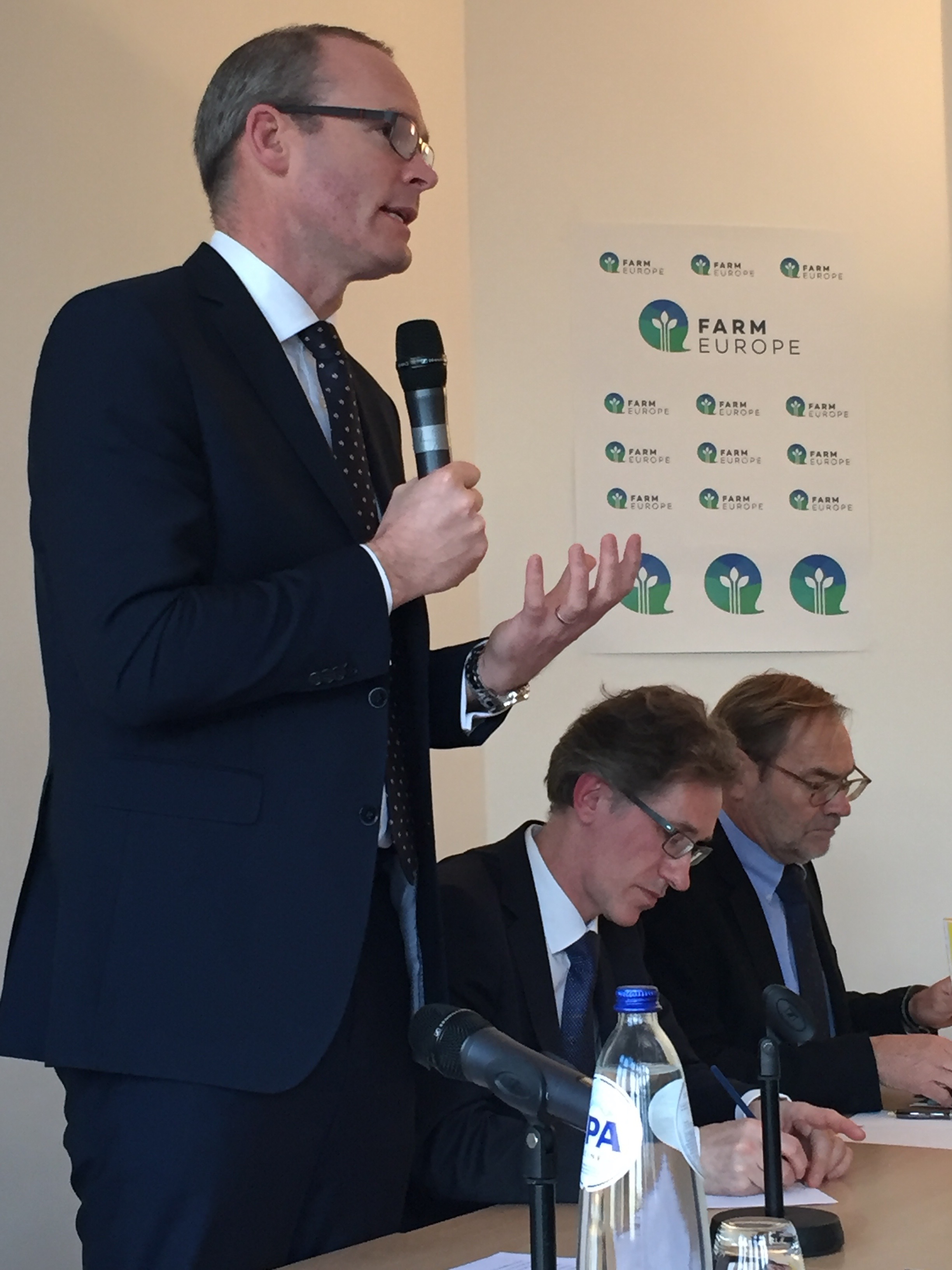
Building coherent and innovative ideas to enhance the contribution of the food chain to public health
MINISTER COVENEY SAYS AGRICULTURE CAN AND WILL DO MORE ON CLIMATE CHANGE
The Irish Minister for Agriculture, Food and the Marine, Simon Coveney has warmly welcomed the historic Paris climate change agreement that has been reached by 195 countries from across the planet.
Speaking at a Farm Europe conference in Brussels on the 14th December Minister Coveney said: “ It is appropriate that we are having a discussion today on sustainability, two days after the historic agreement in Paris which seeks to limit global tempeature increases to less than 2 degrees, and to pursue efforts to achieve 1.5 degrees through binding commitments to cut greenhouse gas emissions”.
“I welcome the fact that the Paris Agreement acknowledges the fundamental priority of safeguarding food security and ending hunger”
The Minister noted that the Paris Agreement included
some particular points of importance to the agriculture, food and forest sectors. “It is also appropriate that world leaders continue to recognise, in Article 2 of the agreement, that, in seeking to prevent interference with climate, we must do so in a manner that does not threaten food production. I welcome the fact that the Paris Agreement acknowledges the fundamental priority of safeguarding food security and ending hunger, and the particular vulnerabilities of food production systems to the adverse impacts of climate change. These aspects of the COP agreement are consistent with the European Council ’s decision last year when the 28 EU Heads of State and Governments agreed to adopt sustainable intensification as EU policy on agriculture and climate change.”
The Minister also noted that the COP agreement includes a clear recognition of role of forests in mitigating climate change and the need to account for both emissions and removals “ this is something that the Irish Government has been emphasising at EU and UN levels for some years ” . Speaking to an audience of EU officials and stakeholder representatives at the Farm Europe event, Minister Coveney however emphasised that these commitments at COP and in the European Council do not mean that there will be a “free pass ” for agriculture in the global effort to fight climate change. He said that agriculture and forestry could and should play a key role in climate change mitigation and adaptation.
“ In Ireland our ambition is to be a global leader in sustainable food production. We already have a climate efficient agriculture, but we want to do mu ch more and to ensure that we are and remain the most sustainable producer or milk, beef and other products in the world .” The Minister said this commitment was manifest in the strong emphasis of our Rural Development programme, worth almost €4 billion over seven years, on environmental benefits, bringing the latest innovative sustainability research and practices direct to farmers.
There will not be a “free pass” for agriculture
“ We will continue to implement measures to drive down the greenhouse gas intensity of our food production even further from its already existing efficient level, including through the Beef Data and Genomics programme, the Green Low Carbon agri – environmental scheme and the carbon navigator / knowledge transfer programmes. Our Origin Green programme is also providing unique far m level verification of our carbon footprint and marketing this internationally to buyers who are increasingly focused on the sustainability of the food they buy. At the same time we are sequestering significant quantities of carbon though our forestry pro gramme under which we plan to plant 44,000 hectares over the next five years ”
The Minister also underlined that Food Wise 2025, our new strategy for the development of the agri – food sector, has sustainable production at its core and sets out a number of specific recommendations aimed at managing growth in a sustainable way and in measuring and monitoring the sustainability credentials of the sector.
Additional Information
UNFCCC 1992
1992 UNFCCC (Article 2):
The ultimate objective of this Convention and any related legal instruments that the Conference of the Parties may adopt is to achieve, in accordance with the relevant provisions of the Convention, stabilization of greenhouse gas concentrations in the atmosphere at a level that would prevent dangerous anthropogenic interference with the climate system.
Such a level should be achieved within a time-frame sufficient to allow ecosystems to adapt naturally to climate change, to ensure that food production is not threatened and to enable economic development to proceed in a sustainable manner.
Paris Agreement 2015
http://unfccc.int/resource/docs/2015/cop21/eng/l09r01.pdf
Preamble
Recognizing the fundamental priority of safeguarding food security and ending hunger, and the particular vulnerabilities of food production systems to the adverse impacts of climate change,
Article 2
Increasing the ability to adapt to the adverse impacts of climate change and foster climate resilience and low greenhouse gas emissions development, in a manner that does not threaten food production;
Article 4.1
In order to achieve the long-term temperature goal set out in Article 2, Parties aim to reach global peaking of greenhouse gas emissions as soon as possible, recognizing that peaking will take longer for developing country Parties, and to undertake rapid reductions thereafter in accordance with best available science, so as to achieve a balance between anthropogenic emissions by sources and removals by sinks of greenhouse gases in the second half of this century, on the basis of equity, and in the context of sustainable development and efforts to eradicate poverty.
Article 5.1
Parties should take action to conserve and enhance, as appropriate, sinks and reservoirs of greenhouse gases as referred to in Article 4, paragraph 1(d), of the Convention, including forests.
Simplification : policy coherence should come first
The cornerstone of the simplification of EU agricultural policy should be coherence among all EU policy initiatives, rather than discussions on the nitty-gritty of regulations.
On Monday, EU agricultural ministers will meet to discuss the simplification of the Common Agriculture Policy, which has been promoted as THE flagship project of the Juncker Commission in the field of agriculture. Simplification is somehow a rather consensual target: all EU agricultural commissioners for at least 20 years have attempted to simplify the CAP.
Despite many initiatives like the “single” payments scheme and the “single” Common Market Organisation, the CAP is still accused of growing more and more complex. The last high level forum, led by Mr Stoiber a few years ago, set the target of 25% reduction in administrative burdens for famers which, on paper, was not only achieved, but even exceeded officially (-36%) ! The same could be said more recently on the REFIT exercise.
As a result, one might suggest that the problem is not directly linked with the CAP itself or regulations as such…
Beyond extrapolating on whether or not the Commission will manage to make a real difference in terms of administrative burdens for farmers this time, it seems necessary to question the target of simplification itself.
Agricultural policy decisions in the EU were historically made by a single department for agriculture, which focused primarily on the Common Agricultural Policy (CAP), under the direction of the Commissioner in charge of Agriculture and Rural Development.
Stakeholders and farmers were following only one policy area in order to understand the functioning of European agricultural policy. They were following the CAP – and that was it ! However, both the European Union and the agricultural sector have since evolved.
On one side, today’s challenges in the agri/food sector – which range from scientific developments and international competition, to climate change and environmental concerns – have required a greater variety of competencies to be shared among an ever-increasing number of sectors. Farmers and food producers not only need to expand theirs skills to new techniques, but they also need to keep an eye on a full range of different societal developments outside their farms or small business which create a sense of complexity, but also real and tangible difficulties to adapt to and anticipate the trends.
On the other side, the EU itself has evolved, with new Member States and new administrative processes. A quick assessment of European policies which have a direct or indirect impact on the agricultural sector – such as those related to trade, health, climate, environment, energy, and external action – demonstrates the interconnectedness of the sector with other policy areas pursued by the EU. Policy-makers preparing the EU position for the 2015 COP Paris Conference, for example, will indirectly influence the decisions to follow shortly after on the role of agriculture in Europe’s climate objectives for 2030. On the one hand, the EU emphasises food security as a top priority, on the other hand, it is about to set target that could reduce the capacity of the same EU to produce more in some regions – this is far from simple ! There is a similar picture when it comes to trade policy. Ambitious trade agreements will imply at least the adjustment of EU agricultural policy to reap the benefits of these agreements, ensuring that European producers are on an equal footing in terms of internal support and competitiveness with their challengers from our trade partners.
Many examples could be added to the list.
Those working in the department for agriculture, and the current Commissioner for Agriculture, do, of course, remain responsible for the implementation of agricultural and rural development policy. However, other elements of agricultural policy, including those such as international trade, environment and climate related objectives, and health and consumer safety, now fall within the mandate of other sections of the European Commission which does not ease the readability of EU policy… And this is without mentioning the multi-layer legislations stemming from mandates for regional and national initiatives at Member State level.
In simple words, to have a simple agriculture policy the real ambition should be to :
- to preserve a single, efficient, and coherent Agricultural/Food Policy at EU level ;
- to focus on a limited number of clear and well targeted tools clearly connected to and coherence with policy objectives ;
- to have a clear leadership with coherent and consistent responsibilities, in order to avoid a fragmented approach.
To achieve this, one might suggest that the EU Commissioner for Agriculture should be up-graded as a vice president in the new EU approach.
In other words, coherence and some kind of centralisation (not incompatible with a level of flexibility) are the cornerstones of the simplification process – but who today really supports such an approach?
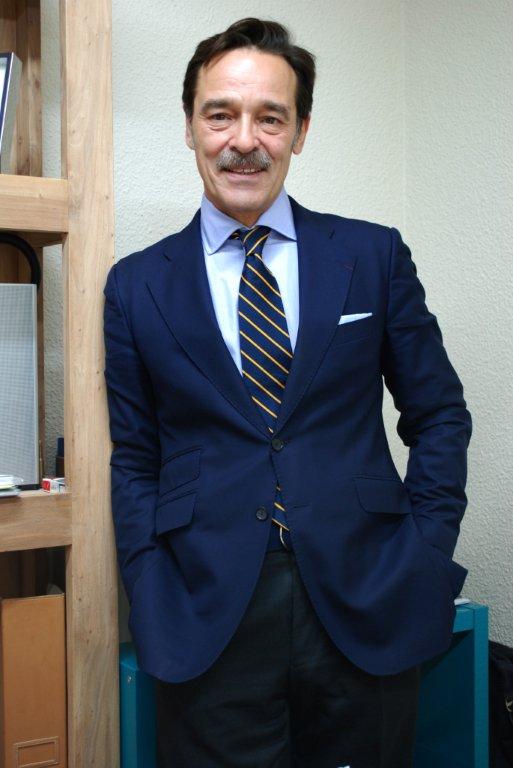
Horacio G. Aleman to boost Farm Europe’s thinking on labelling and food chain issues
Farm Europe is pleased to announce that Horacio Gonzalez Aleman has joined its team of contributors today. A well-known expert both in Spain and at EU level, Horacio is a Lawyer and Postgraduate in European Studies and Agri-food Business.
He offers more than 25 years of experience in Food Chain issues, having held various positions in organisations in the food and drinks industry, at national and European level, as well as in the OECD (BIAC).
He has an in-depth knowledge of regulatory affairs, the internal market, and economic issues affecting the food industry. Horacio will be Farm Europe’s animator for the working groups on the Food Chain and issues related to labelling.
The 4th SCAR Foresight Conference: Sustainable Agriculture, Forestry and Fisheries in the Bioeconomy – A Challenge for Europe’
Farm Europe attended the 4th SCAR Foresight Conference at the European Commission on 8 October 2015.
The conference, titled ‘Sustainable Agriculture, Forestry and Fisheries in the Bioeconomy – A Challenge for Europe’, brought together experts and sectoral representatives to discuss the principles which would enable the primary production sectors – agriculture, forestry, fisheries, and aquaculture – to confront the growing challenges of climate change, food security, and sustainability.
Speakers included Fernand Etgen, Luxembourgish Minister of Agriculture, Viticulture and Consumer Protection, John Bell, from DG Research and Innovation at the European Commission, Ken Ash, Director of Trade and Agriculture at the OECD, and the experts responsible for the production of the SCAR report around which the conference was structured.
The nature of the event called for questions to be raised and discussed, rather than for conclusions to be reached. The perspectives offered were nonetheless enlightening, and the lively debate offered much food for thought. Although common agreement was not the primary aim of the conference, a number of issues were repeatedly emphasised by various speakers, some relating to Research and Investment in the agricultural sector, and others reflecting on the broader nature of European agricultural policy:
- The urgency of the issues at stake: regardless of the scale of the challenge, ensuring food security and respecting the demands of climate change are urgent problems requiring immediate solutions.
- The global nature of these issues: the role of international politics, with such agendas as the New York Sustainable Development Agenda and the upcoming COP 2015 meeting in Paris. The resulting implications of the effectiveness of European policy-making in this area were also raised.
- The need for cooperation among stakeholders: joint priority-setting processes lead to more lasting solutions.
- The need for multiple views, and for the broadening of the debate. This refers to the importance of both public and private sector involvement – including the consultation of civil society and consumers – in agricultural research agenda-setting. The involvement of practitioners can reduce the risk of policy failure, and this holds true for the education of practitioners in new technologies.
- The need for waste reduction, regardless of the eventual importance of biomass to the future of European agriculture, and the related question of the role of consumer behaviour.
- The notion of food systems, rather than ‘food security’, inviting a more holistic approach to the challenges to global food and agriculture and focusing on the potential opportunities for innovation, trade, health, job creation, wealth generation… offered by food security.
- Above all, an overarching theme was the requirement of policy coherence in terms of agricultural policy. This was raised in various contexts – between member state and EU level; in terms of priority-setting; and ultimately in relation to the coherence between different EU policies, such as environment, climate, and development. A primary reason given for this was the need to reduce uncertainty in the sector in order to encourage investment. A related issue was the EU’s obligation to take leadership on the issue of the bioeconomy, and securing European policy coherence was raised as a measure for assuring a strong global role for the European Union on the issue of the future of the agri-food sector.
The closing panel discussion provoked a lively discussion regarding the feasibility of the ‘bioeconomy’ concept, and participants highlighted both the potential for biomass to offer far-reaching solutions to the issue of sustainability and the remaining question marks – including the implications for land use and resource exploitation – which are still to be fully addressed.
Read more about the SCAR process and access the 4th SCAR Foresight Exercise at https://ec.europa.eu/research/scar/index.cfm?pg=foresight4th.
An initial analysis of the package of emergency measures announced by the Commission on the 7th September.
In summary, it is clear that the Commission does not wish to rush out measures. We will have to wait for the outcome of the informal Council of Agriculture Ministers Mid-September before commenting on the ambitiousness of the measures announced yesterday. At this stage it is difficult to predict what impact they may ultimately have on the market.
At this stage the package contains a varied if somewhat motley assortment of measures, some of which offer promising prospects however, and in particular:
– The creation of new financial instruments through the European Investment Bank (EIB): This could prove useful for farmers burdened with significant debts when commodity prices are plummeting. It will take time to put in place and it may be a while before it bears fruit. The idea is nonetheless viable and promising, not least because it addresses a real need facing many farms, especially those that have invested in preparation for the end of quotas.
Other measures being put forward include:
– Enhancing support for private storage: an increase in the level of public aid for private storage could encourage operators to choose to store more. However, the Commission has not yet announced either the new level of aid or details about storage duration requirements. It is therefore difficult at this stage to judge whether the measure will work. If it is well calibrated, it could, to some extent, offer a more politically acceptable alternative to other stronger forms of intervention. If the incentives are sufficient, it could help to rebalance supply and demand over the short term.
– Encouraging a wider use of income stabilisation tools, especially insurance. This is possible under the current CAP’s second pillar, although the provisions are embryonic. In a context of volatile markets, of which the current crisis is just the latest episode, such tools offer a promising approach that the EU should actively pursue.
In addition to which the EU has announced:
– €500 million Euros of ‘targeted’ aid for the dairy sector to be shared among the Member States. Negotiations will undoubtedly be difficult and so there is a risk that the impact of this budget will be diluted. If it is to have an impact, it will need to be carefully targeted. Otherwise the €500 million budget will have to be shared among more than a million farmers, which is unlikely to achieve very much.
Europe must come to grips with the CAP
The European Union has adopted a piecemeal approach to the crises hitting the bloc’s milk and livestock sector, write Yves Madre and Luc Vernet in Euractiv.
The EU’s response to the milk crisis – and to the crisis hitting its livestock production more generally (including pork and beef) – has been at sixes and sevens.
Several hundred million euros in emergency aid was announced during the summer by the governments of the EU’s member states, in particular Belgium, Spain, Italy, France, and Estonia. Were it not for the Council convening an emergency meeting of Agriculture Ministers on the 7 September, we would have been forgiven for forgetting that Europe’s 28 member states have a common agricultural policy at all.
Yet, while the situation in each country, in each sector and in each farm varies, the whole industry is struggling to cope with a perfect storm of negative developments: the Russian ban on EU food products, the Chinese economic slowdown, and the persisting sluggishness in the European market. The questions being asked are ‘what is Europe doing?’ or ‘what can Europe do?’, that is, over and above simply observing that, as in the words of the European Commissioner for Agriculture Phil Hogan in July, “there is too much milk on the market”?
If there’s one thing this summer has shown it is that, in addition to short-term measures, the time has come for a fundamental redesign of the European Common Agricultural Policy itself. We need a fresh forward-looking vision and common strategy for agriculture that encompasses the whole of Europe. It is a tall order, but it is the only way to support agricultural businesses, wherever they are in Europe, to become more resilient in times of crisis and it is the only way to avoid the looming renationalisation of crisis management in the industry.
The world’s food needs are growing fast. European agricultural markets are mature. Europe is technologically advanced and it has a climate that is particularly conducive to agriculture. Europe, therefore, is very well placed to be a major supplier. However, if this is to be, it needs to devise a Europe-wide strategy that is equipped to surmount the challenges that would accompany such growth, a growth that must be sustainable in three dimensions: the environmental, the economic and the social. Such a strategy must, in particular, be better able to cope with market volatility as today’s crisis, will not be the last, far from it. Whether in terms of the economy, the geopolitical situation or the weather, instability is increasingly common, and increasingly violent.
It is abundantly clear that Europe is not, as we speak, able to act. Its lack of effective policy instruments for stabilising farm revenues is simply adding to existing volatility. Why? Because producers operate in a market and most of them are obliged to react to market signals: when demand rises they produce more in order to take advantage of rising prices, when demand falls they also produce more in order to earn through volume what they lose in unit value, but they do so hoping that their neighbour produces less, or goes out of business.
Without a fresh European approach, and renewed European investment in the Common Agricultural Policy, this vicious circle can only create unhealthy competition between producers. It has become urgent, therefore, for Europe to ‘tool up’ for the major economic challenge of coming years: market volatility management.
The most recent CAP reform was focused on an important subject; that of the sustainability of farming practices. To this end, greening was introduced and Europe is set to invest nearly 100 billion euros over 7 years, in order to improve the environmental footprint associated with food production in Europe. The priority today is to get serious about the industry’s economic sustainability, by securing revenues and organising the industry to improve its performance. The economy and the environment are two essential dimensions of the sustainability of European agriculture and also two key ingredients for attracting young people – and investors – into the industry.
In the short term, due to its lack of foresight, Europe can only make do with the tools at its disposal: stop the haemorrhage, limit the damage, and reassure producers, whose dynamism and abilities are key to the rural economy of tomorrow, but who are today demonstrating in the streets.
The palette of useful policy instruments is limited. It is possible to increase the trigger price for public storage (intervention) from 21.7 cents to 25 cents, bringing it in line with the economic reality in the industry, without causing artificial overproduction, such as has happened in the past.
Some voices are encouraging the Commission to put in place a ‘financial package’ for the dairy industry. This would be useful. However, any such package should avoid spreading resources too thinly and should not become a political stunt devoid of any real economic impact.
Measures must focus on the areas and the challenges being faced by the sectors that are in difficulty: the challenge of financial costs related to loans recently contracted by farmers investing in the future; the challenge of small farms located in disadvantaged areas and affected by the crisis even if their markets are much more local; the challenge of extension of the closure of the Russian market; the challenge of conquering new markets and of securing investment resources for marketing campaigns, given that any returns take at least 12 to 18 months to arrive in farmers’ bank accounts.
Europe needs to navigate the next few months with due care, it needs to kick-start discussions on the CAP of tomorrow. By doing this, it will be showing its ambition for Europe’s agriculture and food industry, not only though its budget – which is significant – but also through its ability to come up with a vision and a strategy for its farmers, wherever they are in Europe. It isn’t just about the economics of the moment. It is vital to give a political signal that offers hope for the future for those on whom 500 million Europeans depend for their daily food needs.