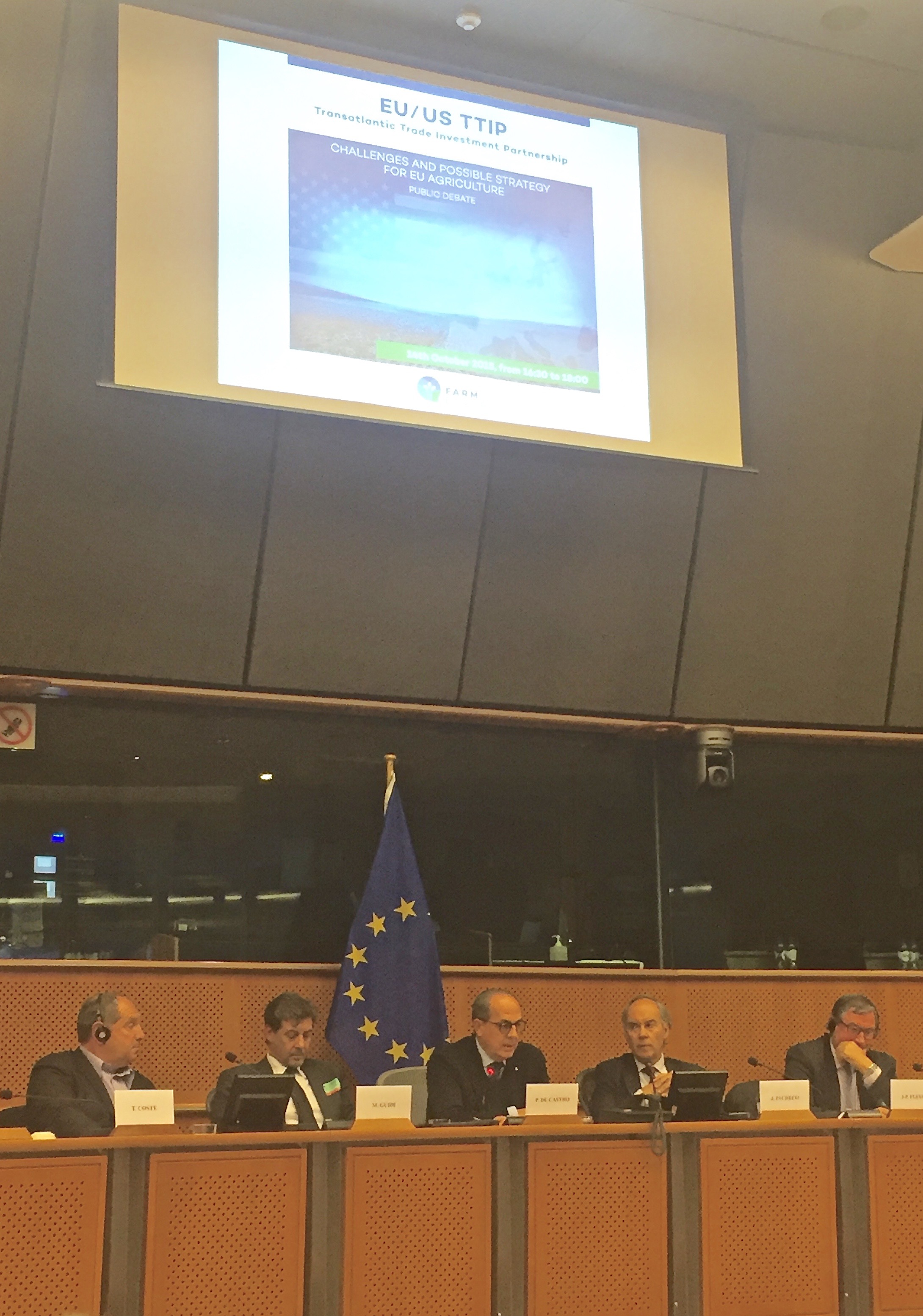
EU/US TTIP: EU Agricultural interests deserve a dynamic and comprehensive approach

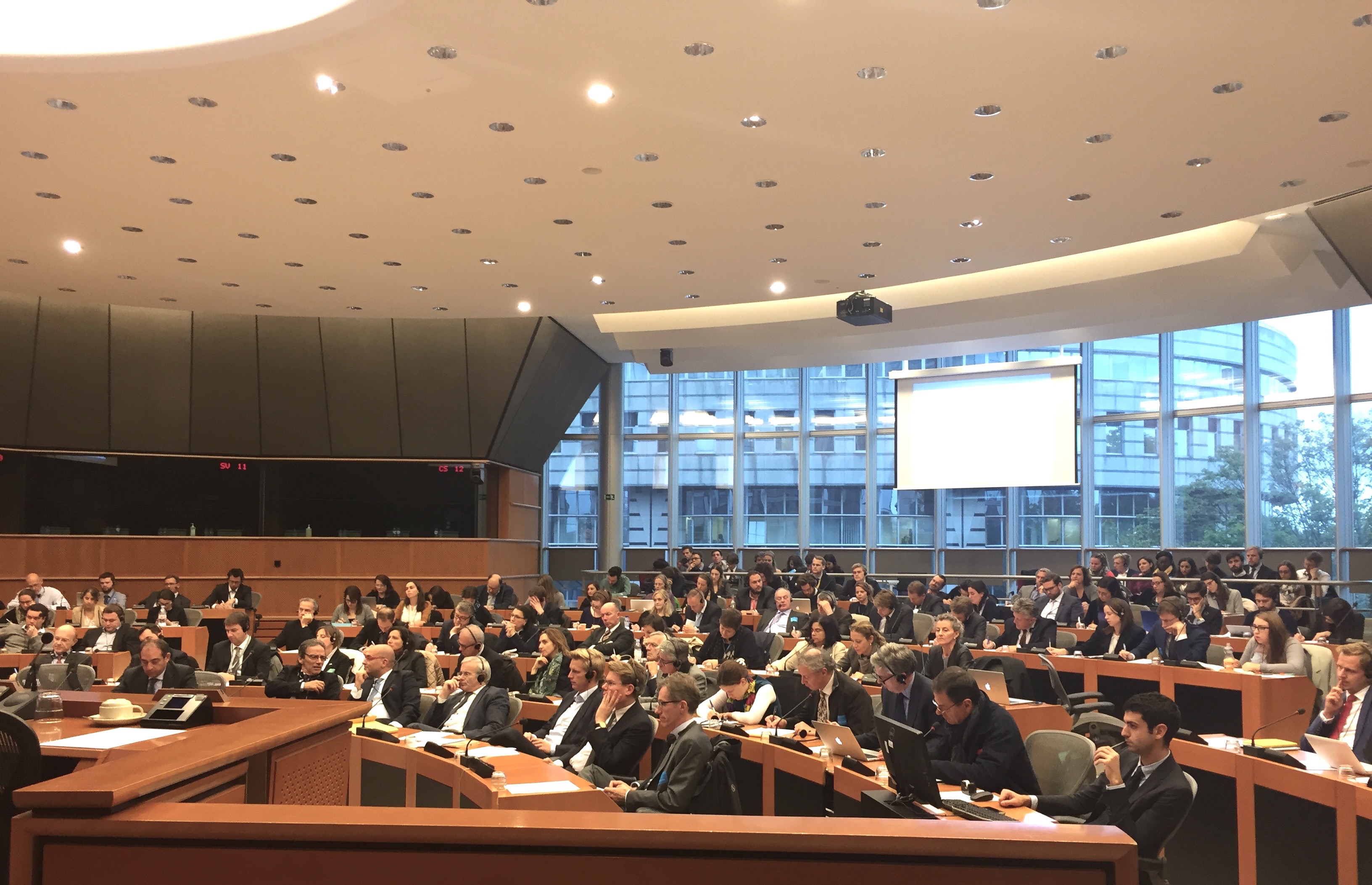
Event TTIP European ParliamentOn Wednesday the 14th of October, Farm Europe organised a public debate on the Transatlantic Trade

and Investment Partnership (TTIP) in the European Parliament, under the patronage of Mr. Paolo De Castro, Member of the European Parliament.

As the TTIP negotiations seem to enter a more dynamic cycle, Farm Europe presented 8key elements to be taken into account by EU negotiators in order to maintain a strong stance regarding European agriculture in the negotiation. Overall a trade negotiation with the US is certainly not as such a top-priority for EU agriculture, even though there are many potential offensive interests that could benefit to the EU economy as a whole. Taking into account the potential contribution of the TTIP to the overall EU economy and geopolitical aspects, it is necessary for EU agriculture to get prepared and opt for a rather dynamic approach.

Presenting the report, Joao Pacheco, Senior Fellow at Farm Europe, said: “the EU should not corner its agriculture into a defensive position nor keep a low profile defending only niche products that already have strong market positions in the US market. Geographical indications are indeed important for the EU agri-food sector – especially those playing a genuine role of locomotive on global markets. But market access of agri-food products as a whole should be addressed seriously to find a win-win balance inside the agricultural component of the negotiation as such. Last but not least, several sectors are potentially facing real threats trough this negotiation which should not be underestimated. Red lines should be tackled both via real safeguards introduced in the course of the negotiation and ambitious internal EU policies giving to the affected sectors the tools to adapt and close their competitive gap with US producers”.

Opening the event, Paolo De Castro said: “TTIP represents a crucial challenge for the European agri-food system. In this sense, in his position approved by large majority last July, the Parliament stressed both the risks and the opportunities for the sector, together with the need to defend our productions and food safety standards. We are confident that, thanks to this steering contribution, the next decisive steps will be finally taken in order to reach a successful agreement able give new impetus to EU agriculture, creating new market opportunities, jobs and employment”.

Farm Europe has identified eight key issues for agriculture in these negotiations, and outlined at the event our main positions and recommendations for each sector:

  1. Meat products: It is crucial to negotiate a limited Tariff Rate Quota instead of eliminating tariffs, with a long implementation period to ensure that the sector has enough time to structure itself. The European Commission should present a comprehensive plan to support the sector.
  2. Dairy products: The TTIP could lead to free trade in dairy products and to the elimination of regulatory trade barriers. However, additional protection for some EU Geographical Indications should be assessed economically to ensure that its benefits outweigh its costs for other areas of the agricultural negotiation.
  3. Grain and Oilseeds: Farm Europe expects that the TTIP could result in the elimination of tariffs in the grains and oilseeds sector. In this case, the EU biofuels policy should enable the EU biodiesel production to expand, rather than serve to constrain it, to allow the EU to compete on an equal footing with the US. The internal distortive mechanisms in force in the Farm Bill should be taken into account by EU negotiators for any concessions such as for wheat, to ensure a level playing field for the EU sector, and specific protections should be maintained for certain highly sensitive products, like rice.
  4. Starch and Ethanol: The EU industry needs time, an appropriate regulatory framework and safeguards to meet the competition from the US. Additionally, the costs and benefits of producing biofuels in the EU should be evaluated objectively, and an assessment should be made of its impact on the EU protein deficit, instead of succumbing to prejudice and targeted campaigns.
  5. Fruits and Vegetables, Nuts and Olive Oil: Free trade and the elimination of non-tariff barriers could generally be beneficial to these highly diversified sectors, as long as SPS barriers in the US are lifted.
  6. Wine and Beer: The EU should be offensive in this sector, building on its renewed competitiveness and concentrating its efforts on eliminating tariffs and non-tariff barriers in the negotiations.
  7. Sugar and other Processed Products: The elimination of EU sugar production quotas after 2017 points to a more ambitious EU position for sugar and sugar-containing products over the long term, as this reform will lead to the expansion of more competitive sugar production. Nevertheless, special attention should be paid to specific sugar products and the EU should strive for strict rules of origin.
  8. Sanitary and Phytosanitary Issues (SPS): Even excluding hormones and GMOs, other SPS issues can be successfully addressed and a mutually agreed solution can be found.

The full analysis can be downloaded here:

http://www.farm-europe.eu/wp-content/uploads/2015/10/TTIP-final.pdf

Farm Europe will also continue working on internal aspects of the agricultural policy. The capacity of the EU to adapt its Common Agricultural Policy to the real economic challenges faced by farmers will play a decisive role in the global competitiveness of the EU agri-food sector, thus deciding its ability to remain a key player on global markets.
Event TTIP European Parliament 2


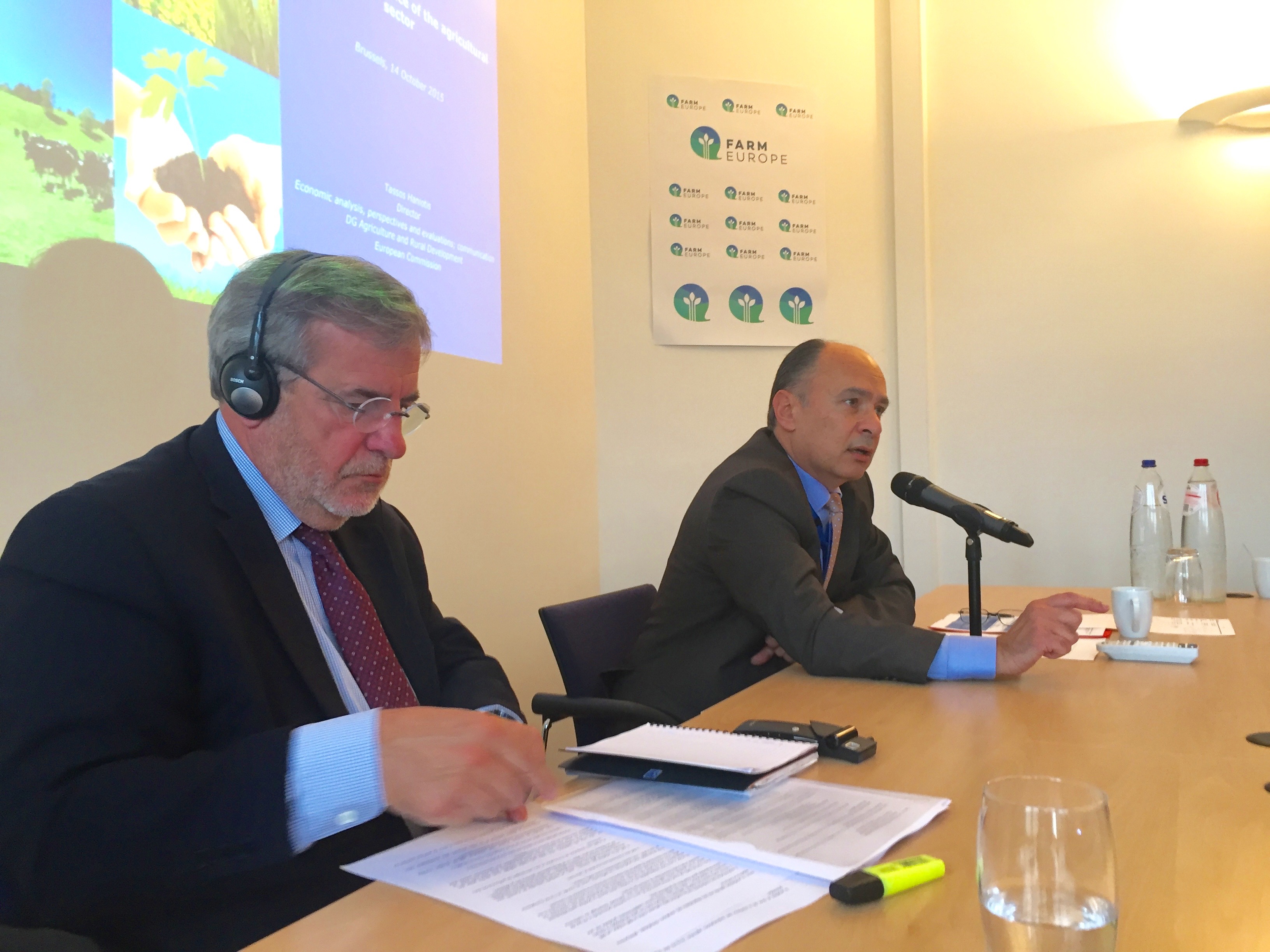
Growth and resilience of the EU agricultural sector – Debate with Mr Tassos Haniotis

IMG_2936On the morning of the 12th October, Farm Europe hosted an event on growth and resilience in the agricultural sector with Mr. Tassos HANIOTIS, Director at the European Commission in charge of Economic analysis, perspectives and evaluation for Agriculture and Rural Development. Mr. Haniotis outlined the drivers of challenges for EU agriculture, the counterintuitive link of agriculture to jobs and growth and the role of the CAP and its policy responses today, and for the future. Mr. Jean-François ISAMBERT, Vice President of AGRALYS, Vice-President of UNIGRAINS, and President of the European Civil Dialogue Group on Arable Crops, led the debate, drawing some conclusions on the challenges and opportunities for the future of European agriculture around 3 interdependent challenges to the agri-food sector – investment, sustainability, and resilience. Mr ISAMBERT said that “the primary question is not whether or not large agriculture areas will play a greater role in global trade in future, but rather whether they are equipped to do so. On this issue, Europe has a strong responsibility, given its favourable position in terms of both conditions for production and in terms of expertise. Indeed, we have the soil, the climate, and the technicalities that allow us to intervene. It is therefore our duty to provide concrete answers to the question of ‘how’ this may be done”.

The 4th SCAR Foresight Conference: Sustainable Agriculture, Forestry and Fisheries in the Bioeconomy – A Challenge for Europe’

Farm Europe attended the 4th SCAR Foresight Conference at the European Commission on 8 October 2015.

The conference, titled ‘Sustainable Agriculture, Forestry and Fisheries in the Bioeconomy – A Challenge for Europe’, brought together experts and sectoral representatives to discuss the principles which would enable the primary production sectors – agriculture, forestry, fisheries, and aquaculture – to confront the growing challenges of climate change, food security, and sustainability.

Speakers included Fernand Etgen, Luxembourgish Minister of Agriculture, Viticulture and Consumer Protection, John Bell, from DG Research and Innovation at the European Commission, Ken Ash, Director of Trade and Agriculture at the OECD, and the experts responsible for the production of the SCAR report around which the conference was structured.

The nature of the event called for questions to be raised and discussed, rather than for conclusions to be reached. The perspectives offered were nonetheless enlightening, and the lively debate offered much food for thought. Although common agreement was not the primary aim of the conference, a number of issues were repeatedly emphasised by various speakers, some relating to Research and Investment in the agricultural sector, and others reflecting on the broader nature of European agricultural policy:

  • The urgency of the issues at stake: regardless of the scale of the challenge, ensuring food security and respecting the demands of climate change are urgent problems requiring immediate solutions.
  • The global nature of these issues: the role of international politics, with such agendas as the New York Sustainable Development Agenda and the upcoming COP 2015 meeting in Paris. The resulting implications of the effectiveness of European policy-making in this area were also raised.
  • The need for cooperation among stakeholders: joint priority-setting processes lead to more lasting solutions.
  • The need for multiple views, and for the broadening of the debate. This refers to the importance of both public and private sector involvement – including the consultation of civil society and consumers – in agricultural research agenda-setting. The involvement of practitioners can reduce the risk of policy failure, and this holds true for the education of practitioners in new technologies.
  • The need for waste reduction, regardless of the eventual importance of biomass to the future of European agriculture, and the related question of the role of consumer behaviour.
  • The notion of food systems, rather than ‘food security’, inviting a more holistic approach to the challenges to global food and agriculture and focusing on the potential opportunities for innovation, trade, health, job creation, wealth generation… offered by food security.
  • Above all, an overarching theme was the requirement of policy coherence in terms of agricultural policy. This was raised in various contexts – between member state and EU level; in terms of priority-setting; and ultimately in relation to the coherence between different EU policies, such as environment, climate, and development. A primary reason given for this was the need to reduce uncertainty in the sector in order to encourage investment. A related issue was the EU’s obligation to take leadership on the issue of the bioeconomy, and securing European policy coherence was raised as a measure for assuring a strong global role for the European Union on the issue of the future of the agri-food sector.

The closing panel discussion provoked a lively discussion regarding the feasibility of the ‘bioeconomy’ concept, and participants highlighted both the potential for biomass to offer far-reaching solutions to the issue of sustainability and the remaining question marks – including the implications for land use and resource exploitation – which are still to be fully addressed.

Read more about the SCAR process and access the 4th SCAR Foresight Exercise at https://ec.europa.eu/research/scar/index.cfm?pg=foresight4th.