FOOD SECURITY: Back at the top of the European political agenda

Like peace, food security has long been taken for granted in Europe.

The violence of the war on the borders of Europe has exploded along with the awareness that we have to worry about the supply of raw materials: energy and agriculture commodities.

So, food security has once again entered our political agenda and our concerns.

Public opinion has learned that the yellow of the Ukrainian flag stands for the significant production of cereals and that European countries (especially Germany and Italy) are largely dependent on Russian gas imports. Indeed, Russia and Ukraine together account for nearly one-third of global wheat exports, 19% of exported corn, and 80% of sunflower oil exports.

According to the Food and Agriculture Organization of the United Nations (FAO), world food commodity prices increased 20.7% in February 2022, compared February 2021, bringing them to an all-time high. The increase for grains was 14.8% above the level of a year ago. February saw increases for all major grains, largely reflecting renewed uncertainties in global supply due to the war in Ukraine. These increases are linked not only to production levels, but also to instability and supply issues in the energy, fertilizer and feed sectors.

All of these factors tend to compress the profit margins of food producers. Indeed, so far the increase in the cost of raw materials and energy has been absorbed only by producers.

The crisis unfolding before our eyes affects:

– the most vulnerable consumers and those with modest incomes in the European Union, but also the fragile populations of Mediterranean and African countries whose ability to cope with these price increases and ensure sufficient supply is limited; we have already seen how rising prices led to riots and political instability in southern Mediterranean countries in 2006/2007;

farmers, whose rising prices of inputs are putting them in a very difficult situation that could lead to a drop in production and abandonment of the countryside, all this when the challenge for the European Union is to increase its food security and meet the demand of its traditional trading partners and neighbours, cushioning the shock of the halt in Ukrainian exports.

Therefore, the EU must take immediate action and engage without delay to ensure the EU’s short- and medium-term food security and contribute to that of our neighbors.

Without delay, the EU must:

1) Mobilize the 479 million € of the CAP crisis reserve, but also commit to increase it in 2022 to the extent necessary outside the CAP budget and to replenish it in 2023 also outside the CAP budget. In a situation of widespread crisis, it makes no sense to take money from farmers by reducing their CAP direct aid and return it in crisis aid through the reserve;

2) Establish cash aid for farms to purchase fertilizer and feed for livestock;

3) Strengthen European protein production as the Commission, European Parliament and Council have already called for; notably by temporary lifting set-aside requirements;

4) Define specific crisis measures for each sector to be activated in case of need, both to cope with crises linked to the closure of certain markets and decreases in consumption resulting from price increases of all necessary household expenses (food, transport, heating);

5) Conduct detailed follow-up – at least monthly – for all sectors with detailed analysis of production, exports, imports and stocks. This exercise of absolute transparency is necessary to avoid the risks of overheating linked to pure speculation.

6) It is also necessary to give the Commission, without delay, the means to ensure a permanent market balance between European supply and exports to be achieved.

Beyond these measures to be taken in the very short term, it is the responsibility of European decision-makers to anchor Europe in a renewed food security.

This enhanced food security is not antithetical to the European Green Deal and the ultimate goals of the Farm to Fork Strategy (F2F). The green transition is necessary. It is not a question of calling it into question. It is not responsible to try to erase it in one fell swoop, nor is it responsible to fear an anti-Green Deal conspiracy to dodge questions that remain unanswered from the outset about the Commission’s proposed modus operandi and its unrealistic points.

F2F and Green Deal more broadly cannot be degrowth strategies as proposed by the Commission. The resulting additional costs are bearable neither for the poorest Europeans nor even for the middle socio-economic classes. The Commission proposes elitist means of action, first as an exclusive cornerstone for the wealthy socio-economic classes, and then leaving the poorest Europeans behind. The suggested Solidarity Fund does not respond to the magnitude of the problem.

The Commission urgently needs to revise its copy and propose means to achieve the Green Deal and F2F that combine economic and environmental performance, and move away from the dogmatic path of degrowth.

This idea is realistic and feasible. It implies a major and immediate effort to invest in existing innovative technologies.

For agriculture, this means an immediate massive investment plan of €15 billion in precision farming and digital agriculture, funded outside the CAP to the tune of €7 billion. As a consequence of such investments, immediate benefits can be expected: reduction of fertilizer consumption by at least 15% on average, substantial reduction in the use of phytosanitary products, while maintaining or even improving the level of European production.

Spain: CAP Strategic Plan 2023-27

March 2022

Strategic priorities

Spain proposes a CAP Strategic Plan 2023-2027 that “aims at the sustainable development of agriculture, food and rural areas to ensure the food security of society through a competitive sector and a living rural environment”.

On the basis that the agri-food system is strategic for Spain, the Plan aims to lay the foundations for it to continue to be so over the next decade. To this end, the CAP will make more efficient use of the budget by linking aid to the fulfillment of objectives, mainly in three areas:

1. Greater equity in income support, through an improvement in the system for distributing direct aid; 2. Ensuring compliance with environmental commitments and objectives, combining regulatory measures with payments that remunerate farmers’ efforts beyond the baseline; 3. Putting into operation a broad set of measures aimed at contributing to the environmental, economic and social sustainability of the sector: investments, innovation, training and advice, as well as a determined effort to facilitate the incorporation of young people and the reduction of the gender gap in the sector.

As for the economic challenges, the plan is to support farmers in improving the competitiveness of their farms through income support, farm advisory services and rural development measures in favor of innovation, improved knowledge, investments, the use of technology and digitalization, among other aspects. It will be especially necessary to leave no one behind, particularly accompanying small and medium-sized farms, since they are the most socially important, and the ones that keep rural areas alive to a greater extent, which is why the plan makes use of all the redistribution measures within its reach: capping, degressivity and redistributive payment. 

In relation to the environmental and climate challenges, in the specific case of Spain, the fight against desertification and erosion, the improvement of soil structure and organic matter content or the maintenance of the high biodiversity linked to agricultural habitats are important needs.

This greater environmental and climate ambition has budgetary backing, as Spain estimates that approximately 43% of the total CAP budget will contribute to environmental and climate objectives. Starting from the baseline of enhanced cross-compliance, the CAP aims to encourage productive changes through additional voluntary payments, both national (eco-schemes) and regional (mainly aid for environmental and climate commitments, but also other measures under the EAFRD).

The eco-schemes are intended to respond to those needs present in general throughout the national territory for which a relatively homogeneous design response is also suitable in the territory. For those needs more specific to certain territories, or with particular characteristics or for which a differentiated territorial response is more effective, the response will come from EAFRD interventions. In addition, greater support will be given to the digital transition, innovation and knowledge transfer, as this is considered a necessary complement to the environmental transformation of farms.

There are also social challenges; through income support, security is provided to the agricultural sector, favoring the maintenance of agricultural activity with the implications this has on the maintenance of rural communities. There are also rural development measures that allow the revitalization of these areas, such as aid for the creation of companies or for basic services. In addition, the Plan will cover other aspects of a social nature that are particularly relevant in Spain, such as reducing the gender gap and supporting generational replacement. Likewise, for the first time, the social dimension is incorporated into the CAP and Spain, taking into account the importance of the presence of employees in our sector, intends to do so from 2024.

The green architecture 

This proposal for the CAP Strategic Plan represents a great step forward in the environmental ambition of this policy in Spain. 

Spain will make coordinated use, fundamentally, of three types of actions: regulatory measures not included in the CAP, but whose compliance will be reinforced by their inclusion in the reinforced cross-compliance by raising the baseline; the reinforced cross-compliance itself; and the environmental interventions of the Strategic Plan.

Specifically, the Spanish Plan proposal, in quantitative terms, represents:

1. an environmental and climate expenditure of 42.7% of the total of its CAP budget;

2. An expenditure on eco-regimes of more than 1,107 million euros per year, equivalent to 23% of Spain’s allocation for direct payments. 

3. An environmental expenditure in EAFRD of more than 47%, which means a slight increase in the current expenditure, despite the fact that in the new period aid to areas with natural limitations only counts for 50% as environmental expenditure (with the calculation criteria of the previous period the EAFRD environmental contribution was 6.76% and now it would reach 50.95%).

4. A 40% increase in the budget available for aid to organic farming.

Eco-schemes included in the Spanish Strategic Plan:

  • Eco-scheme Increasing carbon sink capacity and improving biodiversity in humid grassland areas.

Annual indicative financial allocation: 103,168,071.00 euros

  • Eco-scheme Increasing carbon sink capacity and improving biodiversity in Mediterranean grassland areas.

Annual indicative financial allocation: 115,305,912.00

  • Eco-scheme in dry cropland

Annual indicative financial allocation: € 234,845,259.00

  • Eco-scheme in rainfed wetlands

Annual indicative financial allocation: € 37,456,883.20

  • Eco-scheme in irrigated cropland.

Annual indicative financial allocation: € 171,471,478.40

  • Eco-scheme woodland crops on flat lands

Annual indicative financial allocation: € 73,205,212.00

  • Eco-scheme woodland crops on medium slope lands

Annual indicative financial allocation: € 79,390,381.00

  • Eco-scheme woodland crops on high slope lands

Annual indicative financial allocation: € 154,962,683.00

  • Eco-scheme biodiversity sites on arable and permanent cropland (with sustainable irrigation management)

Annual indicative financial allocation: € 137,687,603.12

The Spanish National Plan provides that for each of these eco-schemes and landscapes a whole set of practices that farmers can follow to fit into the scheme and thus receive support. This approach allows ample flexibility to allow as many farmers as possible to fit into the eco-schemes.

Internal Convergence

Internal convergence will consist of:

Between 2022 and 2026 there will be 5 equal steps, in which, in order to reach the minimum value of 85% in each region, this threshold will be progressively increased in each step by 3%, so that in 2022 all entitlements reach at least 73% of the regional average value and 85% in 2026. Basic aid entitlements whose initial unit value is lower than the regional average value will be increased in each stage by one-tenth of the difference between their initial unit value and the regional average value.

Between 2027 and 2029, convergence will continue so that full convergence of the nominal values of entitlements to the regional average value is achieved in the aid applications corresponding to the year 2029.

Degressivity, Capping & Redistributive payment

Spain has decided to apply the redistributive payment at the regional level, using the territories established in basic income support given the structural differences. The total amount will be 10% of the budget of the First Pillar, i.e. approx. 2, 414 billion, therefore, the amount will be distributed to each region and distributed to farmers according to certain thresholds calculated taking into account the characteristics and structure of the farms and the amount available. The aid will be destined primarily to the medium-sized farms most dependent on agricultural income, without harming the more pluri-active The thresholds have been calculated, for each region, taking into account the characteristics and structure of the farms and the amount available.

Spain proposes a degressivity in the reduction of payments, with the percentages initially proposed by the European Commission, namely:

25% reduction rate from 60,000 to 75,000 euros of aid;

Reduction rate of 50% from 75,000 to 90,000 euros of aid;

Rate of reduction of 85% from 90,000 to 100,000 euros of aid.

Spain will also apply a 100% reduction to payments received above 100,000 euros.

 The amount of basic income support to be granted will be reduced by the labor costs related to agricultural activity actually paid and declared by the farmer in the previous calendar year, including taxes and social contributions related to employment. 

In any event, the maximum amount of basic income support that a farmer may receive may not exceed 200,000 euros.

The exception provided for cooperatives, Agricultural Transformation Companies and Shared Ownership Farms will be applied to degressivity and capping.

Coupled payment

Spain will devote approximately 15% of the budget for direct payments, or 3.461 billion to coupled support. The sectors that will be eligible for coupled aid are: sustainable cow’s milk production, extensive cattle ranchers, cattle ranchers fattening their calves on the farm of birth, sustainable calf fattening ranchers, extensive and semi-extensive meat production sheep and goat ranchers, sustainable sheep and goat milk production, Coupled support for extensive sheep and goat ranchers grazing fallow land, stubble or residues of horticultural crops, including extensive and semi-extensive livestock farms without available pasture, sustainable production of plant-based proteins, sustainable production of rice, sustainable production of sugar beets, sustainable production of tomatoes for processing, producers of nuts in areas at risk of desertification, traditional production of raisins.

Risk management

The strategy considered most appropriate in Spain in terms of agricultural risk management for the period 2023-2027 is based fundamentally on the maintenance and improvement of agricultural insurance as a national policy financed with State aid, complemented by specific crisis management measures aimed at certain sectors, in application of the Common Organization of Agricultural Markets.

Spain’s agricultural insurance system is one of the most developed in the world. It currently has 44 lines of insurance: 28 for agriculture, 12 for livestock, 3 for aquaculture and 1 for forestry. Among vegetable crops, the greatest degree of insurance implementation is in fruit trees, rice and extensive herbaceous crops. In livestock production, dairy cattle and laying poultry stand out.

Its subscription is voluntary, although it is incentivized by means of subsidies that reduce the cost of premiums to producers, which are granted by both the Minister of Agriculture and the Autonomous Regions (they grant aid in highly variable percentages according to territories and productions).

During the 2014-2020 period, public support for agricultural insurance is around 2,000 million euros. This figure maintains Spain as the Member State that devotes the greatest resources to agricultural risk management.

Therefore, during the next programming period, Spain intends to continue basing its risk management policy on the maintenance and improvement of The Combined Agrarian Insurance System as a national policy, financed with equally national funds.  The Combined Agrarian Insurance System in Spain is a very consolidated system with a high degree of maturity. This is a complex public-private insurance scheme. The insurance sector contributes unquestionable value through underwriting techniques and by assuming the established level of risk. The public sector plays a coordinating and planning role. In addition, the role played by the public entity Consorcio de Compensación de Seguros as the mandatory reinsurer of the system is extremely important. The leading role of the agricultural sector itself should also be emphasized.

Additionally, it is necessary to reinforce risk prevention by means of instruments which cover other less frequent eventualities, but which are more difficult to be managed by the farmer on his own. This category includes production risks associated with climate and biological factors. In this regard, climate change predictions point to agriculture as one of the sectors most affected by climate change, especially in countries located in areas of greater vulnerability, such as the Mediterranean basin. Indeed, the forecasts point to a trend towards a decrease in rainfall and an increase in temperature in a large part of Spain, which will lead to a reduction in yields and, therefore, in agricultural profitability. Likewise, an increase in the volatility of production is foreseeable due to the greater frequency of extreme weather events such as drought, heat waves or hail. For this reason, risk management policy must also aim to improve the gradual adaptation of farms to the effects of climate change. In this sense, agricultural insurance is a useful tool to enable such adaptation, as stated in the National Plan for Adaptation to Climate Change.

LIVESTOCK IN THE EU – PERIODIC NEWS

The European livestock sector is facing a growing number of concerns. These include the rising costs of energy, fertiliser and feed, as well as the growing economic impact of veterinary diseases (African swine fever and highly pathogenic avian influenza). 

In Germany, the federal government wants to reduce the proportion of food of animal origin (up to 80% for meat) and to focus on a more plant-based diet.  There is also still no agreement in sight within the coalition on several key agricultural issues such as gene editing and the animal welfare tax.

Nearly a dozen EU countries have joined Ireland in rejecting the European Commission’s attempt to link meat consumption to cancer in its new food promotion programme.

Russia’s invasion of Ukraine could have serious consequences for livestock farming in Europe. In this context of extreme vulnerability of a part of the agricultural world, the European Commission indicates that it will propose in the next few days “exceptional measures” to mitigate market imbalances.

The European Parliament approves the report on animal welfare, paving the way for new EU rules, and MEPs call for the current EU animal welfare rules to be harmonised and enforced more strictly. 

EU Member States have approved the placing on the market of an innovative feed additive for dairy cows that reduces methane emissions.

The Commission continues to support the coordination of the research community on the development, testing and demonstration of carbon farming practices. An expert group, bringing together Member State authorities and stakeholders, will support the Commission in developing standards for the certification of carbon removals.

full note available on FE Members’ area

THE COMMISSION SHOULD REVISE ITS FARM TO FORK & BIODIVERSITY STRATEGIES

March 7th, 2022

The Russian invasion of Ukraine has brought war back to European soil, and its dramatic consequences are unfolding under our eyes.

Ukraine and Russia are world top exporters of grains – wheat, maize, sunflower. The war is blocking exports from the Black Sea, where over 10 million tons of grain can no longer feed world markets. What will happen to the next campaign is anyone’s guess. The effects are already being felt, as grain prices attain ever higher levels.

EU consumers will have to pay more for their food basket, on top of the recent sprawling inflationary pressures. EU meat producers are paying more to feed their livestock. In parts of the Middle-East and Africa the inflation in grain prices is going to afflict legions of poor dwellers.

The war brings pain, but it is also a wake-up call to the EU. It is by now crystal clear to Europeans that they have to improve their energy sovereignty, and be less dependent on imports from Russia.

It should also be crystal clear that the EU should ensure its food sovereignty. Energy and food independence are crucial strategic pillars. We should not put our food supplies in danger, and we should be concerned that neighbors countries and poor countries in Africa do not face starvation.  

This should be a wake-up call to the Commission. The Commission proposals on the Farm to Fork and Biodiversity strategies run frontally counter our food sovereignty and world food security. All the studies and analysis done on the proposals, including the one done by the Commission itself, show staggering results: supply is reduced by more than 10-15% in the key sectors, cereals, oilseeds, beef, dairy cows; over 15% in pork and poultry, and over 5% in vegetables and permanent crops. All the analysis published show similar results, leaving little doubt that we would face a sharp policy self-inflicted contraction of agriculture in the EU.

The EU shouldn’t pursue a policy that reduces its agriculture production when globalization and security of supplies are challenged, and world demand for food and feed is increasing as the world population increases. 

The time has come for the Commission to fundamentally revise its proposals.

Fighting climate change and protecting the environment are priorities that we share. The issue we have is not on implementing policies that go in that direction. The issue is that the Commission proposed policies would have a limited beneficial impact on the environment, as production would go up elsewhere to compensate for the contraction in the EU, with little if any climatic or environmental concerns, whilst having a large negative impact on our food production and increasing inflation.

There are alternative policies that would protect the environment and fight climate change, and increase our production potential at the same time. The key is to foster the right investments in order to achieve sustainable productivity growth. It is doable, it is being proven right, but we need to scale up the efforts in the EU.

The Commission should take stock of the evaluations of its ill-conceived proposals, and change tack without delay. The Commission should not make any specific legislative proposals before revising its copy.

WINE NEWS: BECA report approved without damage for the sector

The month of February was marked by debates in the European Parliament on wine consumption. The European Parliament’s rejection of rapporteur BECA’s proposal equating excessive alcohol consumption with moderate wine consumption is noteworthy, while there is growing concern about the international situation. The war between Ukraine and Russia threatens the wine sector, especially in Spain, Italy and Georgia, and adds further pressure to a sector that needs to recover from the Covid crisis and has been hit hard by the recent rise in energy prices.

full note available on FE Members’ area

Summary description of a H2020 field-scale experiment

Farm Europe is involved in a Horizon 2020 research program, called ‘Plastic in Agricultural Production: Impacts, Life-cycle and LONg-term Sustainability’ (PAPILLONS), which has been launched to explore the impacts of micro-nano plastics in agricultural soils, which represent a key issue for the future of the sustainability and competitiveness of European agriculture. This project gathers universities, research institutes and think tanks.

To learn more about the project itself, please click on the link attached here: https://cordis.europa.eu/project/id/101000210 

(The project has received funding from the European Union’s Horizon 2020 research and innovation programme under grant agreement No 101000210)

The PAPILLONS team is committed to deliver knowledge and data on the behaviour of agricultural plastic fragments in the form of micro- and possibly nano-plastic in agricultural soils and on the potential long-term effects this pollution may have on the farm soil ecosystem. For this, PAPILLONS will conduct (among other types of experimental activity) a large field-scale experiment taking place simultaneously in 3 regions of Europe. This will be carried out between 2022 and 2023. The aim of this experiment is to study the potential effects of mulching film residues on soil ecosystems and their agricultural production.

This call is intended to openly disclose relevant information with the stakeholders of the PAPILLONS project with respect to the above mentioned field experiment, and offer the stakeholders the opportunity to give feedback on the exposure scenario and the treatment levels. By presenting the experimental design in advance, PAPILLONS offers stakeholders the possibility of commenting and providing feedback and ideas prior to execution. These will be considered if they contribute to add quality, meaningfulness and objectivity to the experiment, and if their implementation is technically and economically feasible.

For more information on the objective, background, context and scientific question behind the experiment please consult the attached document or visit our website to find the full document online and leave us a message with your feedback here.

For further information concerning the large field-scale experiment please contact papillons@niva.no

NUTRITION & FOOD POLICIES: Italy presents the Nutrinform

During the Plenary session of the European Parliament of February the House voted and approved the amended report on the EU Beating Cancer Plan: it considers all the steps of the diseases and the influence that diet and lifestyle have on health.

In a presentation, Italian ministers for Health, Agriculture, and Foreign Affairs formally presented the Nutrinform, the national Front-of-pack labelling system that informs about the nutritional value of packaged food. 

Policies intended to reduce salt consumption in the population to improve general health have been proven effective in South Africa through a mandatory reduction regulation of salt in processed foods. 

full note available on FE Members’ area

FARM TO FORK NEWS: the work goes on

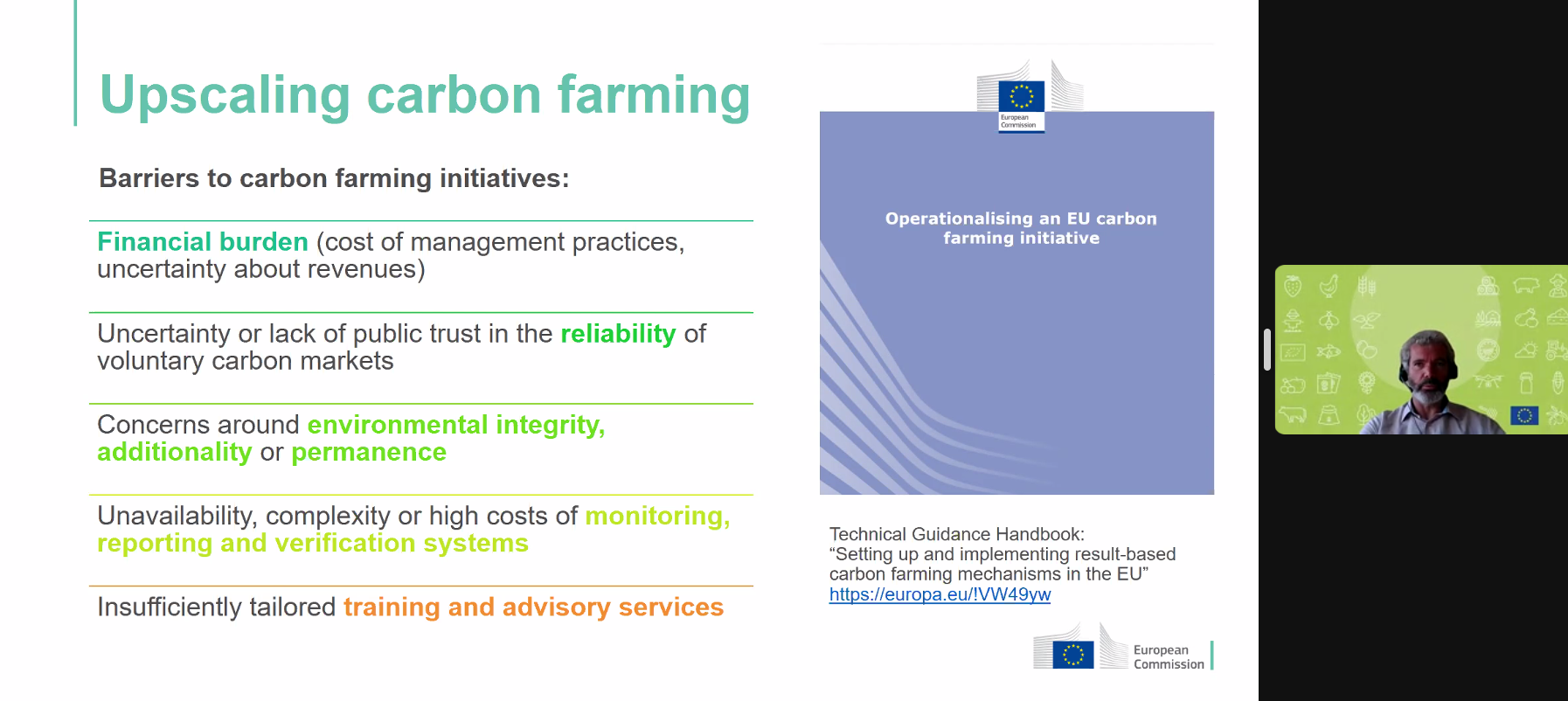
Carbon Farming was one of the topics discussed by the Agri Committee during this month. Even if in agreement with the propositions of the Commission, MEPs raised their concerns over the methodology that would be used to put in place the certification system, how this system will be financed, how to monitor it, and the risk of increasing administrative burden.

From the Council, Ministers discussed and took position on the promotion policy of agri-food products amongst other things. They are strongly opposing the idea of alignment of this policy to the F2F strategy that would result in the loss of the promotional support to some agri-food industries.  

A draft of the revision of the Sustainable use of Pesticide Directive has leaked the Commission’s services.  The Commission intends to implement rules to face the need for the introduction of stricter rules to increase coherence among member States and have more binding effects on policies in individual Member States.

During the Plenary session of the European Parliament of February, MEPs voted on the report on animal welfare (Rapporteur: Decerle, FR, Renew), agreeing on the fact that standards should be harmonized amongst Member States and calling for more stringent rules. 

full note available on FE Members’ area

NEW GENOMIC TECHNIQUES: some MEPs still have doubts

Some MEPs have sent a letter to the Commission ahead of the publishing of draft regulation on plants varieties obtained thanks to new genomic techniques, calling for further research and attention to safety. The 31 elected representatives asked the Commission to analyse in more details the risks related to new genomic techniques, pointing out that the Working Programme of the EU innovation programme Horizon does not foresee research in this sense. However, German MEP Lins, chair of the Agri Committee has declared that the EP is committed to foster research and to give concrete alternatives to farmers by 2030. 

In England, the process of the revision of the legislation that aims to relax the legal context for research on new genomic techniques saw the scrutiny of the parliamentary committee of secondary legislation. The Lords pointed out that the draft law lacks of clarity on the general wider reform process, and on definitions. 

full note available on FE Members’ area

EFSA’s scientific opinion on sugar: more work needed to provide a direction to health authorities

March 1st, 2022

Yesterday, the European Food Safety Authority (EFSA), published its scientific opinion on Tolerable Upper Intake Level of dietary sugars[1], i.e. a maximum level of intake that would not harm the health of consumers, responding to the request of five Nordic countries (Denmark, Finland, Sweden, Iceland & Norway). Upper levels (UL) have already been defined by EFSA for some micro[2] & macro nutrients such as dietary fibres, fats, proteins, etc[3]

In its opinion, EFSA argues that an upper level of intake for sugar could not be defined (as a specific threshold), but it recommends to keep the sugar intake “as low as possible”. This formulation encounters at least two main fallouts: 

Firstly, it allows for the interpretation that there is no safe level of sugar intake, thus, sugar has to be avoided at any cost, no matter of the quantity, which is a breach of the basic good sense nutrition principle of a balance diet. EFSA underlines that the analysed studies and systemic reviews on the relation of sugar on health converge on an assumed linear correlation, and not an “S” shape curve: an upper level, therefore a safe area, cannot be determined.

Nevertheless, EFSA itself states in its scientific opinion that “at levels of added and free sugars intake below 10E% uncertainty is high regarding the shape and direction of the relationships between added and free sugars intake and the risk of metabolic diseases”. This statement should clear out any doubts on the fact that scientific evidence finds that below a certain -indicative- threshold of sugary total energy intake, the negative health effects cannot be directly linked to sugar, but are the outcome of many factors. This statement contradicts the linear approach and shows ultimately, that at this stage, in issuing the statement “as low as possible”, the institution is making politics rather than science, issuing communication headlines rather than providing guidelines for health authorities. 

Communication headlines rather than health guidelines

Secondly, EFSA formulation does not give any concrete guidelines for national authorities for the update of dietary guidelines, thus the definition of nutrient profiles. After having analysed dozens of scientific publications and reviews on the topic, updated its food database (Foodex2), consulted with stakeholders, “as low as possible” is the easy way out and does not help to face growing of health problems both in European adults and children.

Other institutions (international and national bodies) managed to already set their upper limits -which, as the EFSA reminds, is not a target that we should aim to, but rather a maximum threshold above which health risks increase. 

Moreover, EFSA itself already defined some specific thresholds and safe ranges for other nutrients such as salt[4](2.0 g/day of sodium), fats[5] (a daily intake that ranges from 20% to 35% of energy), carbohydrates (ranges from 45 to 60% of total energies), and dietary fibres (25g/day)[6] using a similar methodology of the one used for its analysis on sugar. 

Further work by EFSA needed 

As a result, EFSA’s statement on sugar UL does not define specific safety levels of sugar intakes. This may lead public health authorities (in charge of developing dietary guidelines), food processors and consumers (who want to improve their products & health) to confusion. Therefore, we consider EFSA should address this point and deepen its work on this issue. This is important considering that the publication of the scientific opinion of the European Food Safety Authority on Upper Tolerable Intakes of sugars might be useful in the context of the revision of the FIC regulation (Food Information to Consumer). But at this stage, it is simply impossible to use it as a foundation for a sound and well-informed public health policy.  

Background

Image

The general approach for EFSA to establish a UL includes the analysis of wide datasets and scientific literature after which a “S-shape” graph (such as the one on the side) is used to graphically expose the correlation between the nutrient intake and the health risks. As it can be seen, there is a “safe range” within which the amounts of nutrient intake are considered safe; beyond this range, negative health effects will start to arise according to the scientific literature. The Upper Level corresponds to the last amount of nutrient intake above which negative health effects start to manifest. 

The safe range varies according to the nutrient and it is calculated as a weighted average of the dataset and scientific literature on the subject. For dietary sugars, EFSA points out that such curve is impossible to make because the correlation is assumed to be linear at this stage, thus, a safe range cannot be determined. But data from 0 – 10 E% of intake is not sufficient (highly uncertain) to support this linear conclusion.


[1] https://efsa.onlinelibrary.wiley.com/doi/epdf/10.2903/j.efsa.2022.7074

[2] https://www.efsa.europa.eu/sites/default/files/assets/UL_Summary_tables.pdf

[3] https://www.efsa.europa.eu/sites/default/files/2017_09_DRVs_summary_report.pdf

[4] https://www.efsa.europa.eu/en/efsajournal/pub/5778

[5] https://www.efsa.europa.eu/fr/efsajournal/pub/1461

[6] https://www.efsa.europa.eu/fr/efsajournal/pub/1462