Increasing the intervention price for dairy products is neither a dirty word nor a magic wand

Over recent weeks, all the voices – and there have been quite a few – calling for an increase in the intervention price for dairy products, have run into a wall of ice at the European Commission, which has responded with the argument of “market orientation” and the old story of milk lakes and butter mountains.

The debate about how best to manage agricultural markets is key for the future of Europe’s dairy sector. It is therefore necessary to go beyond simple discourse and properly assess all options before rejecting any of them. Extreme attitudes for or against do nothing but weaken the Union’s ability to put in place an ambitious value-for-money policy at a time when, all around the world, the big players are developing offensive policies.

What do we mean by ‘intervention tools’?

Firstly, intervention is based on a public purchasing scheme that is triggered if the market price falls to a fixed price defined at EU level. If used properly this system offers good value for money for taxpayers. Public authorities buy when markets are low and sell when prices recover. So this is not a debate about wasteful public spending or about an inappropriate use of the EU budget. The public purse should in fact make money out of the system.

“Why wouldn’t it be credible to slightly adjust the intervention price at least to take into account the cumulative inflation since 2007 – setting it at 25 cents?”

Secondly, in a market-oriented system, intervention prices are fixed below production costs to avoid the situation where non-competitive producers produce only to sell into public intervention stocks rather than for the market.

The question, which is easy to ask, but not easy to answer in an EU of 28 Member States is:

Does the current trigger level price of 21.7 cents provide an adequate safety net to prevent competitive farmers from collapsing under exceptional circumstances? What level would be adequate and low enough to discourage producers who might be tempted to make a living from such a scheme?

Thirdly, we might ask why such a system is still needed today? One could be tempted to answer that we have not found any better ways of ensuring market stability, ways that are easy to implement and which offer a truly European response in difficult market conditions (having in mind that a key objective of EU agricultural policy is to stabilise markets and to maintain a dynamic agricultural production all across the EU) – but this would not be a sufficient answer. In recent years – especially in 2009 – the intervention price has served to set a floor to the market – in other words a limit beyond which a crisis cannot worsen further. This means that the intervention price is not merely a financial tool but also plays a psychological role.

Until 2007, before being set at 21.7 cents, the intervention system was activated on yearly basis, which indeed does not make sense. Until now only the deep 2009 crisis had triggered intervention.

If we want the safety net policy to remain fit for purpose, its instruments must remain connected to economic reality without distorting market signals. In this regard, while production costs vary considerably across the EU, recent studies have shown that, for instance, in Bavaria, they are running at 29.6 cents whereas in Italy when they reach 34 cents farmers are no longer making money. While it seems that some farmers in Ireland can live with 26 cents – they are probably the most efficient in Europe.

In light of the above, why wouldn’t it be credible to slightly adjust the intervention price at least to take into account the cumulative inflation since 2007 – setting it at 25 cents?

This would be a positive political signal to be sent by Commissioner Hogan to economic actors across EU of his willingness to maintain on track the stable dairy policy orientation that was initiated when the decision to phase out the milk quotas was made. This would strengthen the confidence of economic actors in EU safety nets policy increasing their capacity to further invest in a post quotas era.

School Schemes: the fight against obesity is a true European responsibility

As key decisions have to be taken in the coming days for the future of both the School Fruit Scheme (SFS) and the School Milk Scheme (SMS), it’s good to come back to the substance and aim of these schemes created to encourage healthy eating, specifically the consumption of fruit, vegetables and milk. These objectives are still very much relevant and needed, which makes me think that we should not only maintain but also strengthen these EU initiatives, as suggested by the Commission proposal and the report drafted by MEP Marc Tarabella in the European Parliament.

The SMS was created in 1977 and all EU Member States participate in the scheme. In 2011/2012, approximately 20.3 million children benefited from the scheme, an 18% increase from 2010/2011. The SFS was set up in 2009 and is EU-wide and voluntary. It aims to provide school children with fruit and vegetables so as to encourage good eating habits in young people. The scheme provides fruit and vegetables and requires participating Member States to set up strategies such as educational and awareness-raising initiatives. 25 Member States took part in SFS in 2013/2014.

The SFS

The SFS was set up by the then Commissioner for Agriculture, Mrs. Fischer Boel, and her team for two reasons:

Firstly, the continuous decline in fruit and vegetable consumption was proving detrimental to European producers. According to Freshfel, the European organisation for fresh fruit and vegetables, consumption has dropped between 7 – 10% over several years and as such the WHO recommended daily intake of 400g is far from being reached in most Member States. One of the objectives of the Common Agricultural Policy (CAP) in article 39 (TFEU) is to stabilise the markets for agricultural products and thus this article formed the legal basis for the creation of SFS.

Secondly, the serious increase in terms of overweight and obese children in the EU needed to be addressed. In 2007 it was estimated that in the EU-25 approximately 22 million children were overweight, with 5 million of these children obese. In February 2014 DG Sanco published its report on the “EU Action Plan on Childhood obesity 2014-2020”, stating that it is estimated “that 1 in 3 children in 2010 were overweight or obese, up from 1 in 4 in 2008”. And also explaining that “If we fail to act on overweight and obesity in children and young people soon, this issue threatens to have a highly negative impact on health and quality of life and may overwhelm our healthcare systems in the near future”. Professor Kenneth Rogoff, of Harvard University, has recently added his voice to the debate about obesity. In an article in the Project Syndicate, dated 12th June 2015, he says “Given the huge impact of obesity on health care costs, life expectancy, and quality of life, it is a topic that merits urgent attention”.

SFS Action and Experience

In 2007 the negotiations on reform of the market organisation for fruits and vegetables were underway. The reform was adopted unanimously by the Agricultural Council. As part of the final compromise the Commission was invited to present a proposal on an EU school fruit scheme based on an evaluation of the costs and benefits. The Commission services carried out an impact assessment (IA), which followed comments from the Impact Assessment Board, and was then further refined and developed and subsequently given the green light. The arguments in favour were, and still are, compelling. The purpose of an effective SFS is to bring about a permanent, lifelong change in dietary habits in favour of the consumption of fruits and vegetables.

When the SFS was adopted in 2008, only a few of the more affluent Member States, such as Germany, Denmark, Belgium, Netherlands, Ireland and the UK, had national school fruit schemes in place. The national schemes varied considerably in terms of scope and measures, with little homogeneity, lack of coherence and focus. Since adoption of the SFS the experience has been quite positive. In 2013/2014 school year almost 10 million children benefited, 66,000 schools, and 67,000t of products were distributed. 25 out of 28 member states participated. The UK, Finland and Sweden do not participate. The UK has chosen not participate on the grounds that it has its own programme, costing £40 million a year. Finland would have liked to participate, agreeing with the scheme’s measure and objectives, but finds the administrative burden too high. Sweden is the only country which refuses to participate on grounds of principle i.e. not an EU justified action.

Problems with SFS

Problems have particularly surfaced with regards to the size of the EU budget, the share of EU co-financing and the eligibility of the accompanying measures (awareness measures).

In relation to the size of the EU budget, experience has shown that in times of pressure on public budgets, many schools could not afford to participate. Even with 75% EU co-financing the national contribution is too burdensome. In some cases, in order to get around the budget constraints, SFS schemes rely on parental contribution. This has the unfortunate effect of limiting the SFS to more well-off children and regions, where the prevalence of obesity is lower compared to the socially disadvantaged areas and children of the EU. The consequence has been that those children most in need of an SFS, in terms of consumption of fruit and vegetables and changes in diet, do not participate in the SFS.

In order to address this problem, the Commission proposed, as part of the CAP 2020 reform, to increase the EU budget from 90 to €150 million, to increase the co-financing rates to 75% in general and 90% for the disadvantaged areas, and to make more of the accompanying measures eligible. The accompanying measures are a central theme in the school fruit scheme. The accompanying measures are there to bridge the gap between schools, farms, the countryside, the environment, healthy lifestyle and healthy diet. It is expected that the changes will allow many more schools and school children to benefit from the SFS. The increase in budget should certainly be welcomed but, as the IA made clear, the budget should have been a minimum of €400 million annually to cover all eligible schoolchildren in the age group from 6 to 10 across the EU. The figure is, of course, even higher if you expand the age group.

The SFS fulfils the subsidiarity test of being voluntary and having a high degree of flexibility for Member States in terms of implementation. It is, however, not really proportional, given the scale of the obesity problem and the risk of the explosion of future health costs, which would warrant a much higher budget to assure full cover. Action at EU level is fully justified given the demonstrated high Member State participation in new programmes put in place, and the fact that the disappearance of the SFS would risk reverting back to the pre-SFS situation and a loss of EU solidarity. A higher budget, constant improvement and effective implementation of the SFS is needed, not abolition.

The SMS

The SMS has faced different challenges than those of the SFS, having received a very negative report twice, contrary to the report on SFS. The SMS has, at times, been criticised as being a surplus measure. For example, at one stage aid was to be given exclusively to fully fat drinking milk in order to get rid of as much milkfat as possible.

One of the main problems with the SMS was the element of deadweight, with the level of aid representing a very small part of the price with consequently little, or no, additional consumption. Other problems related to the lack of accompanying measures, heavy administrative burden and questions about the health of dairy products with high fat content.

However, the scheme has been revised several times and the list of eligible products has expanded to include low-fat milk and milk products, whilst maintaining the absolute level of aid per kilo. This means that de facto the incidence of aid is proportionally higher for the low-fat products given the lower cost price. As to the issue of health, there has been a complete turnaround in the opinion amongst experts, now judging milk and milk products in a much more positive way, pointing to the beneficial aspects of dairy products with regards to calcium, proteins, minerals and vitamins, and other nutrients as part of a balanced diet. The debate about animal fats, saturated and unsaturated, has become much more nuanced with recent scientific studies showing the positive health effects compared to vegetable fats.

All these elements explain the proposal from the Commission, from 30th January 2014, to strengthen the SMS, not least with the element of obliging Member States to introduce accompanying measures, as is the case with the SFS. These changes will allow the SMS to become a much more viable and justified measure, leaving the objective of surplus disposal behind and instead becoming a true instrument to further a healthy lifestyle, a balanced diet and to fight against obesity.

The fight against obesity remains a complex problem. The SMS and the SFS certainly do not provide magical solutions in the fight against obesity, but do offer an important contribution to this fight. They should be maintained and strengthened to serve their purpose in an effective way. It is a true EU responsibility. Public support is there. 
Commission Proposal on GMOs endangers the Single Market

On the 22nd of April the Commission adopted a proposal which will allow Member States (MS) to restrict or prohibit the use of genetically modified food and feed (GMOs) on their territory. The proposal is rather extraordinary since it allows the MS to restrict or ban the use of GMO as feed or for human consumption on the basis of nonscientific reasons. The scientific assessment of the safety for the humans, animals and the environment is undertaken by the European Food Safety Authority (EFSA) before the Commission can propose an authorisation for use in the EU. Consequently MS cannot invoke scientific reasons for an eventual ban. However MS will be allowed to ban the use of GMOs on purely political or arbitrary grounds. This is the first time the Commission has made a proposal, in an area where EU harmonised legislation already exists, which goes against the principles of the single market. Only scientific based concerns or the appearance of new scientific knowledge can be invoked to restrict intra-community trade. In the famous decision by the European Court of Justice, Cassis de Dijon, the principle was laid down; that a product that was marketed legally in one MS could not be prohibited to be marketed in another MS unless there were scientific reasons like human safety that could be invoked. The whole idea of creating a single market based on the White book from 1985 and the process of harmonisation of legislation carried out in the 90s has consequently been given a serious blow. Harmonisation has provided the legal certainty for trade inside the EU as well as for imports into to the EU; this proposal allows a MS to undermine legal certainty.

Commission justification

The Commission justifies the proposal on the grounds that the MS have consistently refused to take political responsibility for authorising GMOs through the normal regulatory procedure, by either rejecting or approving new GMOs. Consequently it has been left to the Commission to systematically approve new GMOs once EFSA gave its green light, thus forcing the Commission to take responsibility for political decisions that should, under normal circumstances, have been taken by the MS. Clearly an unsatisfactory state of affairs, given the controversy surrounding GMOs. In reality this has happened with the tacit collaboration of the MS opposing GMOs sending the responsibility conveniently to the Commission to take the unpopular decision. This has led to a change in the legislation on GMOs by which MS can ban the planting of GMOs on their territory (ban on free release into the environment). To some extent such a ban could be justified if, as an example, you were concerned about a significant organic production you wanted to protect, where cross pollination with GMOs might endanger the organic status. Enforcing safety margins (distance) between organic and non-organic producers should however be sufficient to prevent this from happening in any widespread manner. This piece of legislation, although in breach of the Single Market, should not have any serious intra-community trade consequences since it only inhibits the sale and trade of GMO seeds in some MS affecting a few multinational seed companies, like Monsanto.

Consequences of the Commission proposal

However, extending a ban on GMOs to food and feed could have far-reaching consequences. The EU production of meat and milk is highly dependent on the import of protein rich ingredients like soya beans and meal from big suppliers like USA, Brazil and Argentina where there is a widespread and growing use of GMOs in the production of soya beans. The EU imports, according to FEFAC (European compound Feed Manufactures), 75 % of its needs of soya beans and soya bean meal, accounting for 30-35 Mill tons annually. It is obvious that the EU could not sustain its big and economically very important production of meat and milk if a ban on GMO feed were to be widespread. A MS with a significant animal production would have to think twice about using such a faculty, even in light of public opinion pressure, since a ban would destroy its industry. But what about the MS which have already taken national measures to restrict the use of GMOs beyond the ban on planting? If such a MS were to ban use on their territory, what would happen to animals which have been fed GMOs, to their meat, milk and milk products if somebody wanted to export to such a MS with a ban? Would the MS ban the import with the consequent breakdown in trade and the single market? The Commission says in its proposal that the measures “would have to be compatible with the rules on the internal market, and in particular with article 34 TFEU, which prohibits measures that would have an effect equivalent to a quantitative restriction on the free movement of goods. MS making use of this proposal will therefore need to justify the measures introduced on grounds in accordance with article 36 TFEU and the case law of the court of justice on overriding reasons of public interest “. Article 36 talks, amongst other things, about “public morality “. In the footnote to this sentence there is also reference to the Cassis de Dijon judgement. In the legal text there is no answer to the question of what MS can or cannot do in terms of enforcing a ban on food and feed on their territory. It only says that the MS have to submit a justification and the draft measures to the Commission where the Commission will consult the other MS and where the MS has to wait three months before putting measures in place. This leaves it completely open as to whether MS can take measures to restrict intra-community trade or not, and how such a ban on food and feed would actually be enforced on their territory without this having consequences for the single market. By hiding behind elegant references to article 34 and 36, avoidance of disguised restriction on trade, proportionality and nondiscrimination, the Commission is sending the Black Peter to the MS wanting to introduce a ban.

Risk to the Single Market

Imagine a situation where a MS introduces a ban. Would such a MS interfere with the trade in meat and milk from animals which have been fed with GMOs, and what would be the consequences for the activity of food companies and supermarkets etc.? Would a MS have to introduce controls at the border with other MS, thus reintroducing border controls or would the controls take place at the level of the individual food company? What about products brought in from another MS by a citizen or from a person living in another member state with no ban? To enforce such a ban would require a considerable dedication of resources and manpower, which does not tally with the pressure on public budgets and the need for MS to make savings on public expenditure to respect the Growth and Stability Pact. The idea seems to be preposterous and uncontrollable. If, on the other hand, the Commission is acutely aware that a ban is neither legally nor practically enforceable, does this make the proposal an empty shell for the MS wanting to introduce a ban? The Commission’s Legal Service has apparently given its approval, obtaining formal cover with reference to the mentioned articles and provisons.

Real effect of the proposal

Maybe the whole idea is just to provide a basis/counterbalance for the approval of the 19 pending GMOs, which were approved the following day, and the other 30 or more GMOs in the pipeline, subject to EFSA scrutiny, which sooner or later will appear for approval.

No wonder the proposal has been met with such an outcry both from the NGOs against GMOs, Members of The European Parliament, European and national agricultural and food industry representatives, as well as our trading partners, like the USA, which says such a ban would breach our international commitments under the WTO. Having negotiated the SPS Agreement on behalf of the Commission under the WTO in the Uruguay Round I tend to agree.

The Environment Committee (COMENV), with the support of the Agricultural Committee (COMAGRI) in the European Parliament, is considering a motion to reject the proposal and asking for the Commission to withdraw it. The Commission would not be bound by such a motion, but given the divide amongst MS on the GMO issue and the position of the EP, passage of the proposal in the near future is not very likely.

Best outcome

Maybe the best outcome is a prolonged and protracted negotiation on the proposal, allowing a growing number of GMOs to be approved, which an efficient European agriculture will increasingly need in order to stay competitive and be sustainable. GMO seeds and crops are needed to obtain effective tools to cater for the growing problems with climate change, water shortages, environmental pressure and drop in biodiversity. GMOs will allow planting more draught resistant crops, allow for a reduction and more targeted use of pesticides and fertilisers, whilst maintaining or increasing yields.

Farm Europe is delighted to welcome CONFAGRICOLTURA

ROME, 26.06.2015. Today, Mario GUIDI, president of Confagricoltura, finalised the organisation’s FARM EUROPE membership.

On finalising Confagricoltura’s Farm Europe membership, Mr. GUIDI said: “Italian agriculture, as with all European agriculture, requires ambitious policies led by Brussels. It can not be satisfied with a weak consensus and no real strategy or economic ambition. Europe needs to take into account all dimensions of agriculture, which is, and will remain, a central pillar of the European economy. It is urgent to address the economic challenges faced by agricultural industries and to consider future developments of the CAP, submitting truly ambitious ideas on the subject. Today, at European level, the decision-making process is much longer than it has previously been. If we want an ambitious CAP tomorrow, the work must start now and be supported by strong arguments. It is in this spirit that Confagricoltura will work closely with Farm Europe to stimulate thinking, particularly on issues related to innovation and exports, which are two essential keys to future growth. ”

Yves Madre, co-founder of Farm Europe added: “We welcome Confagricoltura as a new member and major contributor to the think tank. This cooperation enables Farm Europe to gather agricultural expertise from the Baltic to the Mediterranean Sea. Future agricultural policy tools, at European level, should tackle all of the economic problems farmers are facing if we want Europe to keep its leading position in the world.”

Launched on the 29th of April, the think tank Farm Europe aims to develop thinking on effective solutions to unlock political levers so as to increase both the competitiveness and the sustainability of the European agricultural and food sector and to participate in debates with forward looking proposals. Farm Europe’s team builds upon the economic and technical expertise of the organisation’s members so as to cover all policy fields that impact rural economies, with a particular focus on agricultural and food policies, the Common Agricultural Policy, as well as food standards, the food chain, the environment, energy and trade-related issues.

More information:

www.farm-europe.eu

info@farm-europe.eu

Follow us on twitter: @FarmEurope

Farm Europe welcomes the Finnish Central Union of Agricultural Producers

Today, Mr Juha Marttila, president of the MTK (the Finnish Central Union of Agricultural Producers andIMG_1718 Forest Owners), finalised the membership agreement between the MTK  and the think tank FARM EUROPE, in Brussels.
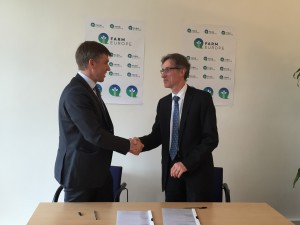
Mr Marttila said: « Agriculture and food are core responsibilities of the European Union both via the Common Agricultural Policy and also through many regulations that impact upon rural business. Within a complex and fast changing world, it’s important to invest not only in short term priorities but also to take the time to reflect on and prepare future strategies proactively, at European level, if we want the European Union to keep its position as a world leader in terms of both competitiveness and sustainability of the farming sector. That is what Farm Europe is about and the MTK is delighted to actively participate in this thinking process. »

Mr Yves Madre, co-Founder of Farm Europe, said : «  We welcome the MTK  as a new member and important contributor to the think tank. This cooperation will strengthen the understanding and the capacity of the think tank to analyse the challenges faced by EU agri-food systems in the northern part of the European Union.The cooperation with the MTK and its representatives will also allow the think tank to develop stronger relations with research institutes in Finland. »

IMG_1721Farm Europe is committed to developing thinking on efficient ways to activate policy levers at EU level to increase both the competitiveness and the sustainability of the EU farming and food sectors and to step into the debate with concrete proposals. The think tank focuses on all policy areas that impact on rural business with a strong emphasis on agriculture and food policies, particularly the Common Agricultural Policy (CAP), but also food standards, the food chain, environment, energy and trade issues.
FOLLOW US :
Twitter: @FarmEurope
 
CONTACT US :
info@farm-europe.eu

The UK’s General Election and the Common Agricultural Policy

countryside derbyshireTomorrow’s UK election is a pivotal time for the agriculture sector, the outcome will have varying impacts upon the future of farming in the UK. The Conservatives, Green Party, Labour, Liberal Democrats, Plaid Cymru, the Scottish National Party and UKIP have all discussed the Common Agricultural Policy in their 2015 manifestos, and have highlighted the significance of farming and agriculture.

The Conservatives have stated in their manifesto that they ‘will push for further reform of the EU’s Common Agricultural Policy’. As part of this, they note that they ‘will push for high animal welfare standards to be incorporated into international trade agreements and into reform of the Common Agricultural Policy… We will ban wild animals in circuses and press for all EU member states to ensure that animals are only sent to slaughterhouses that meet high welfare standards’. Along with this promise of a reform push, the party have also noted that they ‘will help consumers buy British by pushing for country of origin labelling in Europe, particularly for dairy products…’. Despite the proposed CAP reform, the party notes that they ‘will spend £3 billion from the Common Agricultural Policy to enhance England’s countryside over the next five years’. The full Conservative manifesto can be found here here: https://www.conservatives.com/manifesto

The Green Party’s manifesto states that the party will ‘seek to reform the Common Agricultural Policy and reform our national agri-environment schemes to prioritise and support farmers who farm sustainably and enhance biodiversity on farmed land with a variety of farming styles, methods and scales’, as well as this the party pledges the promotion of ‘landscape-scale conservation, using reform of the Common Agricultural Policy, improved agri-environment schemes and the planning system. In particular, all farm payments should be designed to protect the soil, reduce flood risk, conserve wildlife, improve water quality, increase recreation and assist carbon capture’. Find the full Green Party manifesto here: https://www.greenparty.org.uk/we-stand-for/2015-manifesto.html

In the main Labour manifesto the party notes that they too will encourage reform of the CAP, ‘Labour will focus on the completion of the single market and tougher budget discipline, including on those items where spending at the EU level can save money at the national level. That means driving reform of the Common Agricultural Policy and a Commission-led zero-based review of spending on EU agencies to reduce waste and inefficiency’. Labour has also produced a separate rural manifesto. Within the separate manifesto there is no specific mention of the CAP. The party does state, though, that it ‘is clear that British farming’s best interest means remaining in the EU’ and that it ‘will champion farming in the EU to get the best for our farmers, including through better country-of-origin labelling’. Labour’s full manifesto can be found here: http://www.labour.org.uk/manifesto The rural manifesto can be found here: http://press.labour.org.uk/post/117595879344/labour-launches-rural-manifesto-and-pledges-to

In the Liberal Democrat manifesto the party states their desire for ‘continued reform of the Common Agricultural Policy, eliminating the remaining production and export subsidies and supporting the development of environmentally sustainable solutions to growing demand for food’. Further to this, the manifesto notes that they will ‘ensure farming support is concentrated on sustainable food production, conservation and tackling climate change, shifting CAP payments to the active farmer rather than the landowner’. Additionally, The Lib Dems state that they will work towards ‘reducing the proportion of the EU budget spent on the Common Agricultural Policy’. The manifesto also pledges to ‘work at EU level to ensure clear and unambiguous country of origin labelling on meat, meat products, milk and dairy products’. Find the full Liberal Democrat manifesto here: http://www.libdems.org.uk/read-the-full-manifesto

Within the Plaid Cymru manifesto the party states that it ‘will continue to support the Common Agricultural Policy that supports Welsh farming’. This is reiterated elsewhere in the manifesto, ‘we support the continuation of the Common Agricultural Policy that keeps over 80% of Welsh farms in business with direct payments. We opposed the maximum transfer of funds from Pillar One to Pillar Two. This took over a quarter of a billion pounds directly out of Wales’ rural economy’. Plaid Cymru also promise that they will ‘ensure that the Common Agricultural Policy works for Welsh farmers and that all farmers receive the fullest Basic Payment by 1st December 2015’. The Plaid Cymru manifesto can be found here: https://www.partyof.wales/2015-manifesto/?force=1

The Scottish National Party’s manifesto says that they ‘will look to secure a fair share of the UK’s CAP convergence uplift, which comes to the UK as a result of Scotland’s low hectare rates’. As well as this, the SNP pledges to ‘urge the UK government to work with the European Commission to deliver a simplified CAP, in particular with a review of direct payments and Greening, in line with proposals in the Brian Pack report to reduce red tape. We will also continue to press the Agriculture Commissioner to ensure Scottish farmers get clarity and certainty over the implementation arrangements for the new CAP’. Find the SNP manifesto here: http://www.snp.org

The United Kingdom Independence Party (UKIP) advocates leaving the EU, and thus severing ties with the CAP. The UKIP manifesto states that ‘outside the EU, free of the Common Agricultural Policy (CAP) and excessive regulations, we will be able to introduce fairer, simpler ways to support farmers’. Find the full UKIP manifesto here: http://www.ukip.org/manifesto2015

Key points of Joost Korte’s introductory comments at Farm Europe’s launch debate

Joost Korte, Deputy Director General at the European Commission,Joost Korte Launch Debate 2 outlined the key challenges ahead for the EU agriculture and food sector and explained how important the on-going changes, driven by President Jean-Claude Juncker, are. These changes relate to the structure of the new Commission, its working methods and priorities . Under the lead of Vice-president Timmermans, each Commissioner is instructed to undertake a critical assessment of policies and to ask the question as to whether such policies are absolutely essential at European level. Further, before any new major initiative, a consultation process and analysis phase has to be undertaken before a proposal could formally be adopted by the Commission, this takes up to 42 months. As such the Juncker Commission has defined the European Union’s key priorities with three key words – growth, jobs and investments. Continue reading “Key points of Joost Korte’s introductory comments at Farm Europe’s launch debate”
A new perspective on EU agri-food systems

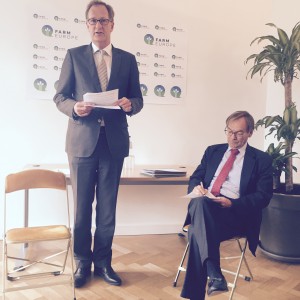
Today, the new think tank Farm Europe held its launch event with delegates from organisations representing the diversity of stakeholders involved in the European food chain as well as officials from the 3 institutions – European Parliament, European Commission and European Council.

The launch event provided an opportunity to present Farm Europe’s vision of the challenges to come for the European agri-food sector. As an introduction to the debate on the future of EU farming as a whole, Mr. Joost Korte, Deputy Director General at the European Commission, was invited to give his views on the state of play for EU agriculture. The launch event has thus provided the Framework For Action programme that Farm Europe will embark on for 2015.

Farm Europe’s thinking process will be the responsibility of a team of well known experts in agriculture, food, environment and trade policies, namely:

  • Joao Pacheco – Former Deputy Director General in DG AGRI. Joao has held multiple top-level positions in the European Commission in DG AGRI. He has also served as European Union Ambassador to Brazil. Joao has extensive experience in multilateral and bilateral trade relations. He brings over 30 years of top European government trade and agriculture policy as well as private sector experience.
  • Lars Hoelgaard – Former Deputy Director General in DG AGRI. He worked in the Danish Ministry of Agriculture before joining the Commission. Lars has served the European Commission for many years in different positions, being a key player in the horizontal and sectorial reforms of the Common Agricultural Policy (CAP). For the last few years, Lars has worked as Special Advisor to the EU Commissioner for Climate Action.
  • Yves Madre – Yves is an agronomist and economist. He was senior advisor to European Commissioner for agriculture and rural development during the last CAP reform. Before that Yves worked in the French Ministry of Agriculture in Paris, and advised food companies and governments in London, Brussels, Hungary, Poland and Slovenia. He has an in-depth knowledge of international negotiations, agriculture and food policies.
  • Luc Vernet – Luc has lived in Brussels since 2010. CFPJ graduated (Journalism, Paris), he also holds an MSc in History. He served the European Commission as Speechwriter to the Commissioner for agriculture and rural development. Before that he worked as a journalist, both in Paris and Brussels, reporting on EU affairs with a special focus on food, environment and agriculture.
  • More experts will be joining Farm Europe in due course.

The think tank will work with organisations which strongly believe that the European project needs to be further developed – not dismantled – and that sustainability can go hand in hand with economic ambition. Agriculture and food policies are key levers to create sustainable growth and jobs for the EU.

Farm Europe gathers expertise from public and private organisations and companies that are willing to invest in future ideas to strengthen, modernise and develop further common EU policies that impact upon agriculture and food systems – energy, sanitary and health issues, environment, agriculture, climate and trade aspects. These policies have been central to the European project since the 1960s and are necessary to evolve towards more effectiveness and to stick to the reality of a fast changing world.

Farm Europe will start working on 5 key topics in relation to EU food systems: growth, sustainability, resilience, the food chain and trade.


FOLLOW US :

Twitter: @FarmEurope

Website: www.farm-europe.eu


CONTACT US :

info@farm-europe.eu

Farm Europe FAQs

What is Farm Europe?

Farm Europe is a multicultural think tank that aims to stimulate thinking on rural economies in the European Union and offer an informal platform to all economic, institutional and academic actors that are interested in:

  • the future of the EU agricultural sector & the food chain;
  • building together and sharing forward looking ideas for an efficient and ambitious EU agenda & political framework.

The think tank focuses on all policy areas that have an impact on rural business with a strong emphasis on agriculture and food policies, and especially the Common Agricultural Policy (CAP), which is the main public lever for action at the European level. It also focuses on food standards, the food chain, environment, energy and trade issues.

Why do we need it?

In the context of a European Union with 28 Member States, and taking into account institutional changes, the think tank is a place:

  • to reflect proactively on the future in order to close the time gap between the EU decision making process and thinking on policies that have an impact on the agri-food sector, with the support of experts having an in-depth knowledge of EU institutions and policies ;
  • to strengthen contacts and informal exchanges with European partners involved in the future of the agri-food sector and who share the same European ambition: farmers organisations, cooperatives, private companies, EU institutions & scientists.

Who stimulates the thinking of the think tank?

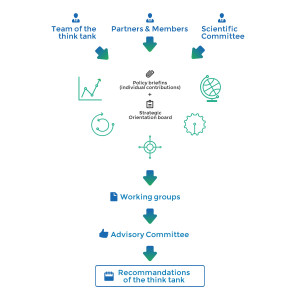
Members of the think tank are fully involved in the working process and are supported by a team of 4 main “animators”:

  •  Joao Pacheco, former Deputy Director General of DG AGRI (European Commission) oversees and stimulates the debate on all the trade related topic.
  • Lars Hoelgaard, former Deputy Director General of DG AGRI, and special advisor to the Climate Action Commissioner.
  • Yves Madre, ex Senior advisor to the Commissioner for Agriculture – coordinates the work of the think tank with a special focus on the Common Agricultural Policy and agricultural markets.
  • Luc Vernet, former journalist and Speechwriter to the Commissioner for Agriculture – general coordination of the work of the think tank with a special focus on the dissemination of the think tank’s thinking.

How do we work?

The work of the think tank is materialized in:schema-how-we-work-EN

  •  Policy briefings (produced by the animators and members of the think tank when they want and have the expertise to feed the debate) ;
  • Internal events to feed the debates with expertise and confront ideas (once a month) and high level events for presidents of member organisations;
  • Political recommendations – to be developed with the members;
  • Events and campaigns to stimulate the debate, promote the ideas of the think tank and engage specific NGOs dealing with specific matters (envi/animal welfare, etc) with the debates.


To know more about Farm Europe, read our section “The Concept”

A project with a view

“You have a great project, I have a great office location”.

This is how we found a wonderful location for Farm Europe – at 9 Rond-Point Schuman. Actually, after putting down the phone, we realized that we hadn’t told Marion (our new landlord) anything at all about Farm Europe ! Meeting such guardian angels is a good example of how things have progressed as we have developed the think tank, as well as of how easy it is for people talk to each other in Brussels!

How did we get here ?

Well, we embarked on a “Tour d’Europe” to develop the concept, to find partners and to test our initial feeling that a real need for a new forum devoted exclusively to reflection on the EU’s agricultural policy does indeed exist. The future of our food & of our rural areas deserves no less ! And from the four corners of Europe we have received the same feedback : we do need a new forum to connect people interested in a pro-European project for food and agriculture – a place where participants can transcend divisions over ‘technicalities’ – a place where it is possible to take the time to focus together on what the future of EU food systems should look like and on how EU policy can help.

This is what Farm Europe is about.

We would like to express our gratitude to all those who have believed in this initiative from its very beginning, to all those who have shared their ideas, advice and ambition with us. Our door is open to anyone who wishes to make a contribution to the future of the Common Agricultural Policy – and to all the EU’s policies that affect our food and our farming sector – including human and plant health issues, energy, climate, trade, and so on.

Farm Europe’s expertise will grow as its network of members and partners expands.

Together, let’s forge our future, let’s reconcile ambition and realism, let’s develop ideas and share them, let’s rise to the challenge !